Today's
EarthStation1.com 15% Off Commemorative Memorial Title: The Second
Russian Revolution TV Series DVD, Video Download, USB Drive
Today, June 28, 2026
June 28: Ukraine Constitution Day: --
Celebrates the date of the adoption of a new constitution in the
Ukraine. On this day in 1996, the Ukrainian parliament - also
known as 'Verkhovna Rada' - voted for the acceptance of the new
document. Since then, Constitution Day has been celebrated as a
national holiday every year. Ukraine was a member of the Soviet
Union until 1991, and during that time it enacted four different
constitutions - one of which being the Constitution of the
Ukrainian Soviet Socialist Republic, which was passed in 1978.
After the disintegration of the Soviet Union in 1991, the Ukraine
waited another three years to hold a presidential election, which
Leonid Kuchma won in 1994. In 1995, Kuchma signed a Constitutional
Agreement and then established the Constitutional Commission,
which would finally lead the Ukrainian parliament - the 'Verkhovna
Rada' - to meet and approve the new constitution, in 1996. In a
session without breaks that lasted for a whole day and a whole
night, 315 deputies voted in favor of the renewed document, which
would give Ukrainians more freedom of speech and human rights. Not
only that but also progressively expanded the rights of private
properties and defined Ukrainian as the only official language of
the country. Ukraine Constitution Day became a work-free holiday
right then and is even mentioned in the constitution itself - the
only holiday to be mentioned in it. Constitutions are documents
that state the main principles or precedents that make up the
legalities of a country or even a company. These papers determine
how these entities are to be governed and limit the amount of
power a government or leader has, so as to not overpower the
predefined fundamental rights. In other words, a constitution is a
document that contains the most important laws of a country or
company and cannot ever be overlooked. On Sale @ 15% Off Discount
Till Midnight PT!
https://store.earthstation1.com/the-second-russian-revolution-6-dvd-set-complete-tv-serie6.html
Today's
EarthStation1.com 15% Off Commemorative Memorial Title: Legacy Of
War: Amerasian Children Of The Vietnam War MP4 Download DVD
Today, June 28, 2026
June 28: Vietnamese Family Day: -- A
national holiday promulgated by Deputy Prime Minister Pham Gia
Khiem in 2001 and has been observed every year since then. This
holiday celebrates the Vietnamese family and its core values, such
as prosperity, equality, progression, and happiness. On this day,
some cities in Vietnam promote festivals and different sorts of
cultural and sportive activities for all families. There are also
campaigns for gifting orphans and children in need. Vietnam is a
country that is very connected to its core cultural values, based
mainly on 'Confucianism' - which means that Vietnamese people are
big fans of respect, education, harmony, and loyalty to family. In
western countries, there's a tendency toward individualism, while
in eastern countries - such as Vietnam - the trend is to see
family as a unit in itself. Children are expected to look after
their parents, besides treating them with uttermost respect.
There's also an expectation for all members of the family to
provide for the household. It's a tradition in Vietnamese culture
for many generations of the same family to live under the same
roof. Families can derogate a member who's not providing proper
conditions for other household members and also announce their
achievements to their community. It's also a tradition for the
older male to be the head of the household and children are
educated from a young age on 'filial piety' - which means that
younger members of the family should treat older members with
respect and care. To keep these cultural aspects alive in the mind
of the people of Vietnam, in 2001, Deputy Prime Minister Pham Gia
Khiem promulgated the Vietnamese Family Day, which is to be
celebrated every year on June 28. On this day families from all
around the country gather to celebrate, whether it be at home or
at festivals downtown. On Sale @ 15% Off Discount Till Midnight
PT!
https://store.earthstation1.com/legacy-of-war-amerasian-children-of-the-vietnam-war-mp4-download-dvd.html
Today's
EarthStation1.com 15% Off Commemorative Memorial Title: Old Time
Radio Children's Show MP3 MegaSet DVD, Download, USB Stick
Today, June 28, 2026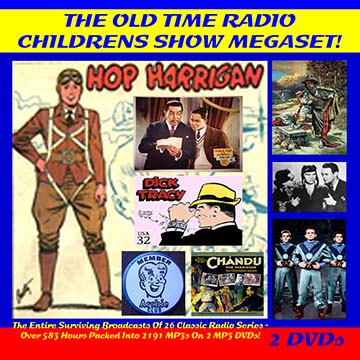
June 28: Dream Big Day (UK): -- The sky
is the limit when it comes to the dreams that children can have!
It is the job of their teachers, parents, and other adults in
their lives to help foster their dreams, encourage open minds, and
assist them in building the skills they will need to contribute to
the world in the future. Today children are encouraged to explore
their interests, follow their passions and dream big about what
the future might look like. It's an initiative meant to break down
barriers, promote diversity, improve social mobility, and make the
world a better, more inclusive place for anyone to aim high and
achieve their dreams! This event encourages employers and
companies in the UK to partner with primary schools that are
interested in integrating career-minded lessons into their
education. The hope behind Dream Big Day is that it will foster
conversations and activities that inspire young minds to tear down
the barriers that might stand in the way of them contributing to
the world in a way that they are passionate about and prepared
for! On Sale @ 15% Off Discount Till Midnight PT!
https://store.earthstation1.com/old-time-radio-childrens-show-megaset-2-dual-layer-mp3-dvd-s23.html
Today's
EarthStation1.com 15% Off Commemorative Memorial Title: Before
Stonewall The Making Of A Gay And Lesbian Community DVD MP4 USB
Today, June 28, 2026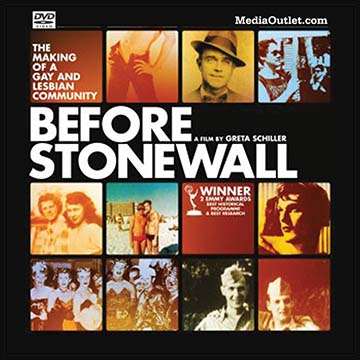
June 28: Christopher Street Day
(Christopher Street Liberation Day, C.S.D., Stonewall Riots
Anniversary Day): -- June 28, 1969: Sexuality: Homosexuality: LGBT
Movements (Lesbian, Gay, Bisexual, And Transgender Movements): The
Gay Liberation Movement (1969-1974): The Stonewall Riots (The
Stonewall Uprising, The Stonewall Rebellion, Stonewall): -- The
Stonewall Riots begin in New York City when a police raid takes
place in the early morning hours at the Stonewall Inn on
Christopher Street in the Greenwich Village neighborhood of
Manhattan, sparking a series of spontaneous, violent
demonstrations by members of the gay (LGBT) community that are
widely considered to constitute the single most important event
leading to the gay liberation movement and the modern fight for
LGBT rights in the United States. Gay Americans in the 1950s and
1960s faced an anti-gay legal system. Early homophile groups in
the U.S. sought to prove that gay people could be assimilated into
society, and they favored non-confrontational education for
homosexuals and heterosexuals alike. The last years of the 1960s,
however, were very contentious, as many social/political movements
were active, including the civil rights movement, the
counterculture of the 1960s, and the anti-Vietnam War movement.
These influences, along with the liberal environment of Greenwich
Village, served as catalysts for the Stonewall riots. Very few
establishments welcomed openly gay people in the 1950s and 1960s.
Those that did were often bars, although bar owners and managers
were rarely gay. At the time, the Stonewall Inn was owned by the
Mafia. It catered to an assortment of patrons and was known to be
popular among the poorest and most marginalized people in the gay
community: drag queens, transgender people, effeminate young men,
butch lesbians, male prostitutes, and homeless youth. Police raids
on gay bars were routine in the 1960s, but officers quickly lost
control of the situation at the Stonewall Inn. Tensions between
New York City police and gay residents of Greenwich Village
erupted into more protests the next evening, and again several
nights later. Within weeks, Village residents quickly organized
into activist groups to concentrate efforts on establishing places
for gays and lesbians to be open about their sexual orientation
without fear of being arrested. After the Stonewall riots, gays
and lesbians in New York City faced gender, race, class, and
generational obstacles to becoming a cohesive community. Within
six months, two gay activist organizations were formed in New
York, concentrating on confrontational tactics, and three
newspapers were established to promote rights for gays and
lesbians. Within a few years, gay rights organizations were
founded across the U.S. and the world. On June 28, 1970, the first
gay pride marches took place in New York, Los Angeles, San
Francisco and Chicago commemorating the anniversary of the riots.
Similar marches were organized in other cities. Today, Gay Pride
events are held annually throughout the world toward the end of
June to mark the Stonewall riots. The Stonewall National Monument
was established at the site in 2016. On Sale @ 15% Off Discount
Till Midnight PT!
https://store.earthstation1.com/before-stonewall-the-making-of-a-gay-and-lesbian-community-dvd.html
Today's
EarthStation1.com 15% Off Commemorative Memorial Title: Mysteries
Of The Great Pyramid DVD MP4 Download USB Flash Drive
Today, June 28, 2026
June 28: Tau Day (Two Pi Day is observed
[3/14 x 2]): -- A celebration of the mathematical constant Tau,
since the fraction 6/28, being June 28 in the month/day format, is
twice Pi. Pi Day is observed on March 14 (3/14 in the month/day
format). Once we know the story of this mathematical constant, we
never look at a circle the same way again. Many people are aware
that pi is the ratio of the circumference of any circle to the
diameter of the circle, but there is a growing movement in favor
of a new ratio taking its place - tau - considered more accurate
than pi, despite pi's popularity. In an age of conspiracy
suspicious, , there is even a rumored conspiracy that the powers
that be are holding steadfast to the concept of pi. The first
known use of tau was approximated by Archimedes in the third
century. He was born in the Greek city-state of Syracuse on the
island of Sicily. Archimedes was known as one of the greatest
scientists of the classical age, who, among many other things,
calculated pi to the most precise value known. Pi is defined as
the ratio of a circle's circumference to its diameter as is tau,
but some believe that Archimedes' work would have been all the
better if he had relied more on tau than pi. During the eighteenth
century, Leonhard Euler used the Greek letter p to represent the
ratio of pi, and for many years thereafter the formula of p
remained the popularized formula of quintessential constant
circle. The p formula helped people understand circles, triangles,
and other principles of geometry. It was a useful device that
served its purpose well, but a new voice would define it as
inelegant a couple of centuries later. The tau movement was
founded by the former University of Utah math professor Robert
Palais who believed that tau simplified the math. Palais noticed
that something was off with pi when calculating the sine of p/2
and the image he saw didn't add up to the calculations. From this,
he knew that pi wasn't the way. Palais published his findings in a
2001 article titled "p is Wrong" in the "Mathematical
Intelligencer." He noted that Euler went back and forth
between tau and pi, but pi became the accepted constant. Palais
then proposed that tau was a superior formula, and he used the pi
symbol with an extra leg to represent it, and it eventually became
an uppercase T. On June 28, 2010, "The Tau Manifesto"
launched at the same time as the first Tau Day. "The Tau
Manifesto" was a book written by Michael Hart that was
dedicated to the lesser-known number. In it, pi is referred to as
unnatural and confusing. Pi compares a circle's circumference with
its diameter, and many mathematicians are disinterested in this
quantity whereas tau is the number that connects a circumference
to that quantity. While Tau Day celebrates all of mathematics
generally, tau specifically still has an uphill battle in
receiving recognition. In the arcana of related days, Pi
Approximation Day is observed on July 22 (7/22), since the
fraction 22/7 is a common approximation of Pi which is accurate to
two decimal places. On Sale @ 15% Off Discount Till Midnight PT!
https://store.earthstation1.com/great-pyramid-of-giza-documentaries-dvd.html
Today's
EarthStation1.com 15% Off Commemorative Memorial Title: Yours
Truly Johnny Dollar Radio Series MP3 DVD, Download, USB Drive
Today, June 28, 2026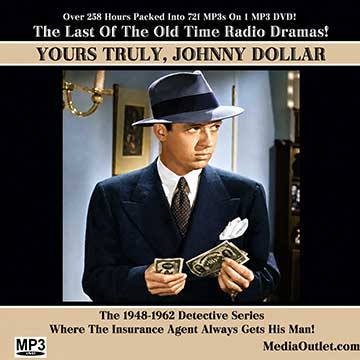
June 28: National Insurance Awareness
Day: -- You never think about it until you need it, so be
proactive and learn what kind of insurance you should have. Talk
to an agent to find the right policies for you. Insurance is
something that most people don't talk about, don't think about,
and when the end comes it snaps right around and hits them square
in the face. Their homes and cars remain unprotected, and there's
nothing to save them when the hammers come down. National
Insurance Awareness Day reminds you that taking the time to talk
to an insurance agent and get a policy on your life, car, or home
can save you and your family at the worst times the future holds.
National Insurance Awareness Day has been created in order to
encourage people to go over their insurance plan on this day.
Insurance offers security in many different situations. It can
recover losses and protect loved ones in the event of death,
illness, or damage. While it offers protection, the value of the
items and properties we have can appreciate over time and our
situations can change. An insurance policy that offered you
excellent protection give years ago may not offer such great
protection today. This is why it is important for people to review
their insurance plans on a periodic basis. The trouble is that it
is very easy to forget about this. After all, there are so many
other things to think about! That's why National Insurance
Awareness Day was created; to ensure that people are reminded to
go over their insurance plans on this date. It also presents a
great opportunity for people to learn about insurance in general
and the different policies that are available. Insurance is an
incredibly interesting topic, especially when you realize just how
old this form of protection really is. We had thought it wasn't
any older than a couple of hundred years, but we couldn't be more
wrong. It actually has a history stretching back far into the
past, with the earliest known versions of it being found in
3000-2000 BC. Insurance has been around so long it's even found
inscribed on the Code of Hammurabi, the first written laws.
Imagine that! It even predated what was considered the official
foundation of law, that's some history. Insurance, as we think of
it in the modern age, came into existence sometime around the
Great Fire of London, where the devastation that took place
brought about the idea of property insurance. While insurance had
up to this point had been considered some kind of convenience, it
was now clear to the inhabitants of London that insurance was
something that could protect a family fortune, and indeed an
entire estate in the event of a disaster. From there sprang all
the forms of insurance we know today, including underwriting
ventures in the event of failure (common in the age of sailing
ships and questionable seas), to car insurance and life insurance.
National Insurance Awareness Day celebrates the history and
necessity of this fantastic invention, and encourages people to
understand the important role it can play in their lives. On Sale
@ 15% Off Discount Till Midnight PT!
https://store.earthstation1.com/yours-truly-johnny-dollar-old-time-radio-dual-layer-mp3-dv3.html
Today's
EarthStation1.com 15% Off Commemorative Memorial Title: American
Revolutionary War Documentaries DVD, Download, USB Drive
Today, June 28, 2026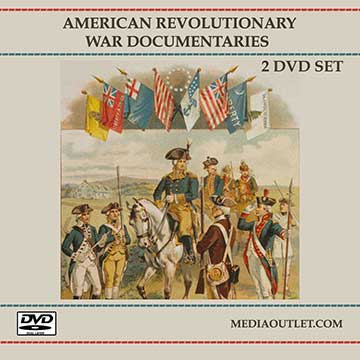
June 28: Carolina Day: -- June 28, 1776:
The Age Of Enlightenment (The Enlightenment, The Age Of Reason):
The Age Of Revolution: The Atlantic Revolutions: The American
Enlightenment: The American Revolution: The American Revolutionary
War: The Battle Of Sullivan's Island (The Battle Of Fort Sullivan,
The First Siege Of Charleston): -- The first decisive American
victory in the American Revolutionary War takes place when The
Battle Of Sullivan's Island is fought near Charleston, South
Carolina, leading to the commemoration of Carolina Day. Delayed by
logistical concerns and bad weather, British forces reached the
coast of North Carolina in May 1776. Finding conditions unsuitable
for their operations, General Henry Clinton and Admiral Sir Peter
Parker decided instead to act against Charleston. Arriving there
in early June, troops were landed on Long Island (now called Isle
of Palms), near Sullivan's Island where Colonel William Moultrie
commanded a partially constructed fort, in preparation for a naval
bombardment and land assault. General Charles Lee, commanding the
southern Continental theater of the war, would provide
supervision. The land assault was frustrated when the channel
between the two islands was found to be too deep to wade, and the
American defenses prevented an amphibious landing. The naval
bombardment had little effect due to the sandy soil and the spongy
nature of the fort's palmetto log construction. Careful fire by
the defenders wrought significant damage on the British fleet,
which withdrew after an entire day's bombardment. The British
withdrew their expedition force to New York, and did not return to
South Carolina until 1780. On Sale @ 15% Off Discount Till
Midnight PT!
https://store.earthstation1.com/american-revolutionary-war-dvd-documentaries.html
Today's
EarthStation1.com 15% Off Commemorative Memorial Title: Alaska At
War: Japanese WWII Invasion Of Alaska DVD, Download, USB
Today, June 28, 2026
June 28: National Alaska Day: --
Recognizes the largest state to join the union and the Nation's
Last Frontier. Not only is Alaska the largest state, but it is
also home to the highest mountain peaks in the country, including
Mt. Denali. In The Last Frontier, it's possible to test the
theories associated with the Bering Land Bridge. Check out the
remote and intriguing location of North America's history.
Populated by Inuit, Yupik, Tlingit, and others long before Russian
and European explorers found their way to the Arctic land, Alaska
supported the indigenous people with sufficient whale fat, beaver,
and fish. The Land of the Midnight Sun led to the next great gold
rush. In the Yukon, many would venture into the rugged North
expecting to find riches in the Klondike. Those who did, would
find it difficult to get it back out again_alive. The Iditarod
takes place in Alaska and runs 1,150 miles from Anchorage to Nome.
Honoring the traditions of the sled dog culture and the Iditarod
Trail, the annual event draws thousands of spectators and online
viewers. In 1925, Leonhard Seppala along with several other
mushers delivered much-needed anti-diphtheria serum to Nome along
the same route. On January 3, 1959, Alaska became the 49th state.
The immense Denali National Park and Preserve is home to glaciers,
fossil records, and a study in geology. All along the Alaska
Range, the pristine wilderness provides hikers the most
well-marked trails outstanding views, and peaceful vistas. Venture
into Glacier Bay for glimpses of an icy blue you'll see nowhere
else on Earth. Listen for the rugged mountains of ice collapsing
into the bay or seek the humpback whales breaking the surface. The
sights and sounds of the bay are as abundant as the history, too.
On Sale @ 15% Off Discount Till Midnight PT!
https://store.earthstation1.com/alaska-at-war-dvd-wwii-invasion-by-japan.html
Today's
EarthStation1.com 15% Off Commemorative Memorial Title: Hitler's
War 2 Part WWII TV Documentary Series DVD, Download, USB
Today, June 28, 2026
June 28, 1942: The European Civil War:
World War II: The Second European War (The European Theater Of
World War II): The Eastern Front Of World War II: The Great
Patriotic War (The German-Soviet War): Case Blue (German: Fall
Blau): -- The German Wehrmacht begins its strategic summer
offensive against southern Russia, code named Case Blue, the
Wehrmacht's plan for the 1942 strategic summer offensive in
southern Russia which would last until November 24 1942. The
objective was to capture the oil fields of Baku (Azerbaijan SSR),
Grozny and Maikop for two purposes: to enable the Germans to
re-supply their low fuel stock and also to deny their use to the
Soviet Union, thereby bringing about the complete collapse of the
Soviet war effort. After Operation Barbarossa failed to destroy
the Soviet Union as a political and military threat the previous
year, Adolf Hitler, the Fuhrer of Nazi Germany, recognised that
Germany was now locked in a war of attrition, and he was also
aware that Germany was running low on fuel supply and would not be
able to continue attacking deeper into enemy territory without
more stock. With this in mind, Hitler ordered for the preparation
of offensive plans for summer 1942 to secure the Soviet oil fields
in the Caucasus. The operation involved a two-pronged attack: one
from the Axis right flank against the oil fields of Baku, known as
Operation Edelweiss, and one from the left flank to protect the
first attack, moving in the direction of Stalingrad along the Don
River, known as Operation Fischreiher. Army Group South
(Heeresgruppe Sud) of the German Army was divided into Army Groups
A and B (Heeresgruppe A and B). Army Group A was tasked with
fulfilling Operation Edelweiss by crossing the Caucasus mountains
to reach the Baku oil fields, while Army Group B protected its
flanks along the Volga by fulfilling Operation Fischreiher.
Supported by 2,035 Luftwaffe aircraft and 1,934 tanks and assault
guns, the 1,570,287-man Army Group South began the offensive on
June 28, advancing 48 kilometers on the first day and easily
brushing aside the 1,715,000 Red Army troops opposite, who falsely
expected a German offensive on Moscow even after Blau commenced.
The Soviet collapse in the south allowed the Germans to capture
the western part of Voronezh on July 6 and reach and cross the Don
river near Stalingrad on July 26. Army Group B's approach toward
Stalingrad slowed in late July and early August owing to constant
counterattacks by newly deployed Red Army reserves and
overstretched German supply lines. The Germans defeated the
Soviets in the Battle of Kalach and the combat shifted to the city
itself in late August. Nonstop Luftwaffe airstrikes, artillery
fire and street-to-street combat completely destroyed the city and
inflicted heavy casualties on the opposing forces. After three
months of battle, the Germans controlled 90% of Stalingrad on
November 19. In the south, Army Group A captured Rostov on July
23, and swept south from the Don to the Caucasus, capturing the
demolished oilfields at Maikop on August 9 and Elista on August 13
near the Caspian Sea coast. Heavy Soviet resistance and the long
distances from Axis sources of supply reduced the Axis offensive
to local advances only and prevented the Germans from completing
their strategic objective of capturing the main Caucasus oilfield
at Baku. Luftwaffe bombers destroyed the oilfields at Grozny but
attacks on Baku were prevented by the insufficient range of the
German fighters. The Allies were concerned about the possibility
of German forces continuing to the south and east and linking up
with Japanese forces (then advancing in Burma) in India. However,
the Red Army defeated the Germans at Stalingrad, following
Operations Uranus and Little Saturn. This defeat forced the Axis
to retreat from the Caucasus in order to avoid getting cut off by
the Red Army, which was now advancing from Stalingrad towards
Rostov in order to achieve the cut-off. Only the Kuban region
remained tentatively occupied by Axis troops. On Sale @ 15% Off
Discount Till Midnight PT!
https://store.earthstation1.com/hitler39s-war-dvd-2-part-tv-second-world-war-history-ser392.html
Today's
EarthStation1.com 15% Off Commemorative Memorial Title: Muhammad
Ali Documentaries And Entire Fights DVD, Download, USB Drive
Today, June 28, 2026
June 28, 1971: Sports: The History Of
Sports: The History Of Sports In The United States: The History Of
Boxing: The History Of Heavyweight Boxing: The Aftermath Of World
War II: The Cold War: The Cold War In Asia: The Indochina Wars:
The Vietnam War (The Second Indochina War, The Vietnam Conflict,
The Resistance War Against America): The United States In The
Vietnam War: Opposition To United States Involvement In The
Vietnam War: Clay v. United States: -- The U.S. Supreme Court
unanimously overturns the draft evasion conviction of Muhammad Ali
by an 8-0 vote (Justice Thurgood Marshall recused himself, as he
had been the U.S. Solicitor General at the time of Ali's
conviction). The decision was not based on, nor did it address,
the merits of Ali's claims per se. Rather, the Court held that
since the appeal board gave no reason for the denial of a
conscientious objector exemption to Ali, that it was therefore
impossible to determine which of the three basic tests for
conscientious objector status (offered in the Justice Department's
brief) the appeal board relied on, and Ali's conviction must be
reversed. On June 20, 1967, Muhammad Ali, after a one day trial,
had been found guilty after only 21 minutes of deliberation of the
criminal offense of violating the Selective Service laws by
refusing to be drafted, and was sentenced to five years in prison
and a 10K USD fine. He paid a bond and remained free while the
verdict was being appealed. After a Court of Appeals upheld the
conviction, the case was reviewed by the U.S. Supreme Court in
1971. Ali remained free in the years between the Appellate Court
decision and the Supreme Court ruling. As public opinion began
turning people against the war and the Civil Rights Movement
continued to gather momentum, Ali became a popular speaker at
colleges and universities across the country; this itinerary was
rare if not unprecedented for a prizefighter. At Howard
University, for example, he gave his popular "Black Is Best"
speech to 4,000 cheering students and community intellectuals,
after he was invited to speak by sociology professor Nathan Hare
on behalf of the Black Power Committee, a student protest group.
Ali's example inspired many black Americans and others. However,
initially when he refused induction, he became arguably the most
hated man in the country and received many death threats. People
who supported Ali during this time were also threatened, including
sports journalist Jerry Izenberg, whose columns defended Ali's
decision not to serve. He wrote, "Bomb threats emptied our
office, making the staff stand out in the snow. My car windshield
was smashed with a sledgehammer." The New York Times
columnist William Rhoden wrote, "Ali's actions changed my
standard of what constituted an athlete's greatness. Possessing a
killer jump shot or the ability to stop on a dime was no longer
enough. What were you doing for the liberation of your people?
What were you doing to help your country live up to the covenant
of its founding principles?" Recalling Ali's anti-war
position, Kareem Abdul-Jabbar said: "I remember the teachers
at my high school didn't like Ali because he was so
anti-establishment and he kind of thumbed his nose at authority
and got away with it. The fact that he was proud to be a black man
and that he had so much talent ... made some people think that he
was dangerous. But for those very reasons I enjoyed him."
Civil rights figures came to believe that Ali had an energizing
effect on the freedom movement as a whole. Ali was honored with
the annual Martin Luther King Award in 1970 by civil rights leader
Ralph Abernathy, who called him "a living example of soul
power, the March on Washington in two fists." Coretta Scott
King added that Ali was "a champion of justice and peace and
unity." In speaking of the cost on Ali's career of his
refusal to be drafted, his trainer Angelo Dundee said, "One
thing must be taken into account when talking about Ali: He was
robbed of his best years, his prime years." Ali's promoter
Bob Arum did not support Ali's choice at the time, but in 2016
Arum stated: "when I look back at his life, and I was blessed
to call him a friend and spent a lot of time with him, it's hard
for me to talk about his exploits in boxing because as great as
they were they paled in comparison to the impact that he had on
the world. ... He did what he thought was right. And it turned out
he was right, and I was wrong." On Sale @ 15% Off Discount
Till Midnight PT!
https://store.earthstation1.com/muhammad-ali--dvd-2-discs-documentaries-and-entire-fight2.html
Today's
EarthStation1.com 15% Off Commemorative Memorial Title: Monarchy
In The UK: British Royal History MP4 Video Download DVD Set
Today, June 28, 2026
June 28, 1461: The English Monarchy (The
Monarchy Of The Kingdom Of England): Coronations: -- Edward IV is
crowned King Of England. Edward IV of England (April 28, 1442 -
April 9, 1483) King Of England from March 4, 1461 to October 3,
1470, and again from April 11, 1471 until his death. Before
becoming king, he was Duke of York, Earl of March, Earl of
Cambridge and Earl of Ulster. The first half of his rule was
marred by the violence associated with the Wars Of The Roses, a
series of English civil wars for control of the throne of England
fought between supporters of two rival branches of the royal House
Of Plantagenet: the House of Lancaster, associated with a red
rose, and the House Of York, whose symbol was a white rose. When
he overcame the Lancastrian challenge to the throne at The Battle
Of Tewkesbury in 1471, Edward was the first Yorkist King Of
England, and reigned in peace until his sudden death. When
Edward's health began to fail, and he became subject to an
increasing number of ailments. He fell fatally ill at Easter 1483,
but survived long enough to add some codicils to his will, the
most important being to name his brother Richard, Duke of
Gloucester as Protector after his death. He died on April 9, 1483
and was buried in St George's Chapel, Windsor Castle. He was
succeeded by his twelve-year-old son Edward V of England (who was
never crowned) and then by his brother Richard, who utlimately
became Kind Richard III, the protagonist of the play by William
Shakespeare. It is not known what actually caused Edward's death.
Pneumonia and typhoid have both been conjectured, as well as
poison. Some attributed his death to an unhealthy lifestyle, as he
had become stout and inactive in the years before his death. On
Sale @ 15% Off Discount Till Midnight PT!
https://store.earthstation1.com/monarchy-in-the-uk-british-royal-history-mp4-video-download-dvd-set.html
Today's
EarthStation1.com 15% Off Commemorative Memorial Title: Triumph Of
The West 13 Part TV Documentary Series DVD, Download, USB
Today, June 28, 2026
June 28, 1491: #BOTD: #HBD! Henry VIII,
King Of England from 1509 until his death, first English monarch
to rule as King Of Ireland, author and composer, whose
contemporaries considered Henry in his prime to be an attractive,
educated and accomplished king, described as one of the most
charismatic rulers to sit on the English throne, best known for
his six marriages and, in particular, his efforts to have his
first marriage to Catherine Of Aragon annulled, which efforts
resulted in his excommunication from the Catholic church by Pope
Clement VII and led Henry to initiate the English Reformation by
separating the Church of England from papal authority, his
appointing himself as the Supreme Head of the Church of England,
and his the dissolution of Catholic convents and monasteries in
England (d. January 28, 1547) is #born Henry Tudor at the Palace
of Placentia in Greenwich, Kent, England. On April 21, 1509, Henry
VIII ascended to the throne of England on the death of his father,
Henry VII. Henry VIII was King Of England from 1509 until his
death. Henry was the second Tudor monarch, succeeding his father,
Henry VII. Henry is best known for his six marriages and, in
particular, his efforts to have his first marriage, to Catherine
Of Aragon, annulled. His disagreement with the Pope on the
question of such an annulment led Henry to initiate the English
Reformation, separating the Church of England from papal
authority. He appointed himself the Supreme Head of the Church of
England and dissolved convents and monasteries. Despite his
resulting excommunication, Henry remained a believer in core
Catholic theological teachings. Domestically, Henry is known for
his radical changes to the English Constitution, ushering into
England the theory of the divine right of kings. Besides asserting
the sovereign's supremacy over the Church of England, he greatly
expanded royal power during his reign. Charges of treason and
heresy were commonly used to quell dissent, and those accused were
often executed without a formal trial, by means of bills of
attainder. He achieved many of his political aims through the work
of his chief ministers, some of whom were banished or executed
when they fell out of his favour. Thomas Wolsey, Thomas More,
Thomas Cromwell, Richard Rich, and Thomas Cranmer all figured
prominently in Henry's administration. He was an extravagant
spender and used the proceeds from the Dissolution of the
Monasteries and acts of the Reformation Parliament to convert into
royal revenue the money that was formerly paid to Rome. Despite
the influx of money from these sources, Henry was continually on
the verge of financial ruin due to his personal extravagance as
well as his numerous costly continental wars, particularly with
Francis I of France and the Holy Roman Emperor Charles V, as he
sought to enforce his claim to the Kingdom of France. At home, he
oversaw the legal union of England and Wales with the Laws in
Wales Acts 1535 and 1542 and following the Crown of Ireland Act
1542 he was the first English monarch to rule as King Of Ireland.
His contemporaries considered Henry in his prime to be an
attractive, educated and accomplished king. He has been described
as "one of the most charismatic rulers to sit on the English
throne". He was an author and composer. As he aged, Henry
became severely obese and his health suffered, contributing to his
death in 1547. Henry VIII died at the age of 55 in the Palace Of
Whitehall, on what would have been his father's 90th birthday, a
death brought on by his severe obesity and a complex of other
diseases. He was succeeded by his son Edward VI. Late in life,
Henry became obese, with a waist measurement of 54 inches (140
cm), and had to be moved about with the help of mechanical
devices. He was covered with painful boils and possibly suffered
from gout. His obesity and other medical problems can be traced to
the jousting accident in 1536 in which he suffered a leg wound.
The chronic wound festered for the remainder of his life and
became ulcerated, preventing him from maintaining the level of
physical activity he had previously enjoyed. The jousting accident
is also believed to have caused Henry's mood swings, which may
have had a dramatic effect on his personality and temperament. He
is frequently characterised in his later life as a lustful,
egotistical, harsh, and insecure king. The tomb he had planned
(with components taken from the tomb intended for Cardinal Wolsey)
was only partly constructed and was never completed. (The
sarcophagus and its base were later removed and used for Lord
Nelson's tomb in the crypt of St. Paul's Cathedral.) Henry was
interred in a vault at St George's Chapel, Windsor Castle, next to
Jane Seymour. Over 100 years later, King Charles I (ruled
1625-1649) was buried in the same vault. On Sale @ 15% Off
Discount Till Midnight PT!
https://store.earthstation1.com/triumph-of-the-west-tv-series-5-dual-layer-dvds-all-13-sh513.html
Today's
EarthStation1.com 15% Off Commemorative Memorial Title: Korea: The
Unknown War TV Korean War Series DVD, Download, USB Drive
Today, June 28, 2026
June 28, 1950: Korea: The History Of
Korea: The Aftermath Of World War II: The Cold War: The Korean
Conflict: The Korean War: The First Battle Of Seoul: Hangang
Bridge Bombing (Korean: Hangang Indogyo Pogpa): -- While packed
with South Korean refugees fleeing Seoul, the South Korean Army,
in order to delay the rapid North Korean advance towards the city,
blows up The Hangang Bridge over The Han River in Seoul, killing
hundreds of refugees evacuating the city and trapping their own
Republic Of Korea Army 5th Division, known as The Key Division, on
the far side of the bridge; North Korean forces were nonetheless
able to cross the river later that day and occupy Seoul. At 11:00
am on June 28, the South Korean Army headquarters decided to
destroy the Hangang Bridge to stop the North Korean invasion, and
gave up defending Seoul. From noon to 3:30 pm that day, the South
Korean Army planted 3,600 pounds of TNT at the Hangang Bridge in
preparation for its demolition. At 11:30pm, the demolition
warning-order was issued -- however, the South Korean Army failed
to announce the approaching demolition to Seoul residents. At 2:30
am on June 28, the demolition charges were detonated without
warning. On the bridge were retreating soldiers and policemen
crossing the river when it was demolished. ROK Ministry of
National Defense confirmed that 77 policemen from Seoul Jongno
Police Station died in the blast at that time. Three American war
correspondents - Burton Crane of New York Times, Frank Gibney of
Time magazine and Keyes Beech of Chicago Daily News -- tried to
cross the bridge by jeep, but when 25 years away from the bridge
their jeep's windshield shattered in their face by the blast.
Burton Crane and Keyes Beech immediately reported their
experience, but due to military censorship, they only announced
that truckloads of South Korean soldiers were all killed without
mentioning of any civilian casualties. It was estimated there were
200-800 casualties (mostly soldiers and policemen) but the exact
number and identification of victims has not yet been established.
At 11:00 am, The North Korean Army reached the bridge, and shortly
after crossing the river, successfully occupied Seoul. The
military engineer responsible for the bridge and carrying out the
demolition, Colonel Choi Chang-Sik, was court-martialed for
misbehavior before the enemy. He was found guilty and sentenced to
death. Chang-Sik was executed by firing squad on September 21,
1950. In 1964, Choi's wife pleaded his innocence to an appeal
tribunal and the court found Choi as not guilty because the
demolition order was issued by his superior officers. On June 28,
2007, the first memorial service was held by a local veterans'
peace association. On Sale @ 15% Off Discount Till Midnight PT!
https://store.earthstation1.com/korea-the-unknown-war-dvd-complete-6-part-tv-series-3-dis63.html
Today's
EarthStation1.com 15% Off Commemorative Memorial Title: The Eagle
And The Bear: The Korean War 2 Part Series MP4 Download DVD
Today, June 28, 2026
June 28, 1950: Korea: The History Of
Korea: The Aftermath Of World War II: The Cold War: The Korean
Conflict: The Korean War: War Crimes: Massacres Of The Korean War:
The Bodo League Massacre (Korean: Bodoyeonmaeng Hagsal) (The Bodo
League Massacres) (Summer 1950): -- South Korean President Syngman
Rhee, ultimately with the complicity of the United States Army, in
the face of the rapid and apparently nearly unstoppable North
Korean military advance into South Korea, begins the summer-long
Bolo League Massacre (which is more properly named The Bolo League
Massacres) when he has summarily executed between 60,000 to
200,000 suspected South Korean communists and alleged
communist-sympathizers, many of whom were civilians who had no
connection to communism or communists. The massacre was committed
by the government forces of president Syngman Rhee and falsely
blamed on the communists led by North Korean leader Kim Il Sung.
The South Korean government made efforts to conceal the massacre
for four decades. Survivors were forbidden by the government from
revealing it, under threat of being treated as communist
sympathizers; public revelation carried with it the threat of
torture and death. During the 1990s and onwards, several corpses
were excavated from mass graves, resulting in public awareness of
the massacre. Half a century after the massacre, The Truth and
Reconciliation Commission -- the South Korean governmental body
responsible for investigating incidents in Korean history which
occurred from Japan's rule of Korea in 1910 through the end of
authoritarian rule in South Korea with the election of President
Kim Young-sam in 1993 -- investigated this massacre, among other
incidents that were largely kept hidden from history, unlike the
well-publicized North Korean executions of South Korean
right-wingers. In the years before the massacre, South Korean
President Syngman Rhee had "enrolled", on the pretext of
protecting them from execution, about 300,000 suspected communist
sympathizers, as well as his political opponents , in an official
"re-education" movement known as the National Bodo
League (Korean: Gukmin Bodo Yeonmaeng), also known as The National
Rehabilitation And Guidance League, The National Guard Alliance,
and The National Guidance Alliance. The Bodo League was created by
Korean jurists who had collaborated with the Japanese colonial
government; this corrupt system forced non-communist sympathizers
and others into The Bodo League in order to fill enlistment
quotas. In June 1949, the South Korean government accused
independence activists of being members of the Bodo League.
By1950, just before the outbreak of the Korean War, Syngman Rhee
had about 20,000 alleged communists imprisoned. Under the
leadership of Kim Il Sung, the Korean People's Army attacked from
the north on June 25, 1950, starting the Korean War. According to
Kim Mansik, who was a military police superior officer, President
Syngman Rhee reacted to this invasion with panic, and ordered the
execution of people related to either The Bodo League or The South
Korean Workers Party on June 28, 1950, the same day that he
ordered Hangang Bridge Bombing (Korean: Hangang Indogyo Pogpa)
that killed hundreds of refugees evacuating Seoul and stranded his
own army on the far side of The Han River. The first of The Bolo
League Massacres began the next day, June 28, in Hoengseong
County, Gangwon-Do Province. Retreating South Korean forces and
anti-communist groups executed the alleged communist prisoners,
along with many of the Bodo League members. The executions were
performed without any trials or sentencing. Kim Tae Sun, the chief
of the Seoul Metropolitan Police, admitted to personally executing
at least 12 "communists and suspected communists" after
the outbreak of the war. When Seoul was recaptured in late
September 1950, an estimated 30,000 South Koreans were summarily
deemed collaborators with the North Koreans and shot by ROK
forces. At least one US lieutenant colonel is known to have
approved the executions at the request of a South Korean
regimental commander. Lt. Col. Rollins S. Emmerich, after
initially stalling and disapproving, told the South Korean
regimental commander Kim Chong-won that he could kill a large
number of political prisoners in Busan if the North Korean troops
approached so that they would not fall into enemy hands. A mass
execution of 3,400 South Koreans did indeed take place near Busan
that summer. United States official documents show that American
officers witnessed and photographed the massacre. In another,
United States official documents show that John J. Muccio, then
United States Ambassador to South Korea, made recommendations to
Rhee and Defense Minister Shin Sung-mo that the executions be
stopped. American witnesses also reported the scene of the
execution of a girl who appeared to be 12 or 13 years old. The
massacre was also reported to both Washington and Gen. Douglas
MacArthur, who described it as an "internal matter".
According to one witness, 40 victims had their backs broken with
rifle butts and were shot later. Victims in seaside villages were
tied together and thrown into the sea to drown.[12] Retired South
Korean Adm. Nam Sang-hui confessed that he authorized 200 victims'
bodies to be thrown into the sea, saying, "There was no time
for trials for them." There were also British and Australian
witnesses. Great Britain raised this issue with the U.S. at a
diplomatic level, causing Dean Rusk, Assistant Secretary of State
for Far Eastern Affairs, to inform the British that U.S.
commanders were doing "everything they can to curb such
atrocities". During the massacre, the British protected their
allies and saved some citizens. The Associated Press conducted
extensive archival research and found documents classified
"secret" and "filed away" by the Pentagon and
State Department in Washington, that had indicated the US
commander Gen. Douglas MacArthur made no attempts to curb the
summary mass killings. As the North Korean army was nearing
Daejeon, the South Korean paramilitary forces executed around
7,000 political prisoners, men, women, and children in mass graves
as American officers took photographs which were kept classified
until they were released in 1999. This was merely one of many such
mass killings conducted by South Korean forces against political
prisoners in the first months of the war. Many, including the
Daejon Massacre, were propagandistically blamed on the North
Koreans. After the UN offensive in which South Korea recovered its
occupied territories, the police and militia groups executed
suspected North Korean sympathizers. In October 1950, the Goyang
Geumjeong Cave massacre occurred. In December, British troops
saved civilians lined up to be shot by South Korean officers and
seized one execution site outside Seoul to prevent further
massacres. On January 4 1951, the Ganghwa Massacre was committed
by South Korean police, who killed 139 civilians in an effort to
prevent their collaboration with the North Koreans. According to a
South Korean report, South Korea and the U.S. "aided
right-wing civil organizations, such as the Ganghwa Self-Defense
Forces, by providing combat equipment and supplies." In 2008,
trenches containing bodies were discovered in Daejeon, South
Korea, and other sites. South Korea's Truth and Reconciliation
Commission documented testimonies of those still alive and who
took part in the executions, including former Daejeon prison guard
Lee Joon-young. Besides photographs of the execution trench sites,
the National Archives in Washington D.C. released declassified
photographs of U.S. soldiers at execution sites including Daejeon,
confirming American military knowledge. On Sale @ 15% Off Discount
Till Midnight PT!
https://store.earthstation1.com/the-eagle-and-the-bear-the-korean-war-dvd-both-tv-documentaries.html
Today's
EarthStation1.com 15% Off Commemorative Memorial Title: Korean War
Films And Documentaries Collection DVD, MP4 Download, USB
Today, June 28, 2026
June 28, 1950: Korea: The History Of
Korea: The Aftermath Of World War II: The Cold War: The Korean
Conflict: The Korean War: The First Battle Of Seoul: War Crimes:
Massacres Of The Korean War: The Seoul National University
Hospital Massacre (Korean: Seouldaehaggyo Busogbyeong-Won Hagsal
Sageon): -- The Seoul National University Hospital Massacre occurs
when North Korea's Korean People's Army (KPA) kills 700 to 900
doctors, nurses, inpatient civilians and wounded soldiers at the
Seoul National University Hospital, Seoul district of South Korea.
During The First Battle Of Seoul, the KPA wiped out one platoon
which guarded Seoul National University Hospital earlier that day.
They massacred medical personnel, inpatients and wounded soldiers.
The Korean People's Army either shot or buried the people alive.
The civilian victims alone numbered 900. According to South Korean
Ministry of National Defense, the victims included 100 wounded
South Korean soldiers. On Sale @ 15% Off Discount Till Midnight
PT!
https://store.earthstation1.com/korean-war-films-and-documentaries-dvd.html
Today's
EarthStation1.com 15% Off Commemorative Memorial Title: The Siege
Of Vicksburg American Civil War DVD MP4 Download USB Drive
Today, June 28, 2026
June 28, 1862: The American Civil War
(The Civil War, The War Between The States): The Western Theater
Of The American Civil War: The Vicksburg Campaign: The Siege Of
Vicksburg: -- The Naval portion of The Siege Of Vicksburg begins
as the Union Navy conducts the first naval bombardment of
Vicksburg and the first successful passage of city's formidible
gun batteries as Admiral David Farragut succeeds in taking his
fleet of deep-water naval vessels up the Mississippi River past
Grand Gulf and under the guns of Vicksburg. The siege continued on
for over a year. The Siege Of Vicksburg (May 18 - July 4, 1863)
was the final major military action in the Vicksburg Campaign of
the American Civil War. Vicksburg was the last major Confederate
stronghold on the Mississippi River. The successful ending of the
Vicksburg Campaign significantly degraded the ability of the
Confederacy to maintain its war effort. The Confederate surrender
of Vicksburg on July 4, 1863 is sometimes considered, when
combined with Gen. Robert E. Lee's defeat at Gettysburg by Maj.
Gen. George Meade, the turning point of the war. It cut off the
states of Arkansas, Louisiana, and Texas from the rest of the
Confederate States, effectively splitting the Confederacy in two
for the duration of the war. The Union victory also permanently
severed communication between the Trans-Mississippi Department and
the balance of the Confederacy. On Sale @ 15% Off Discount Till
Midnight PT!
https://store.earthstation1.com/the-siege-of-vicksburg-american-civil-war-dvd-mp4-download-usb-driv4.html
Today's
EarthStation1.com 15% Off Commemorative Memorial Title: Crusade:
The First Crusade's History And Trail DVD, MP4, USB Drive
Today, June 28, 2026
June 28, 1098: Religion: The History Of
Religion: Abrahamic Religions: Christianity: The History Of Roman
Catholicism: The Latin Church (Latin: Ecclesia Latina): The Middle
Ages (The Medieval Period, The Mediaeval Period): The Crusades:
The First Crusade (1096-1099): The Siege Of Antioch: The First
Siege Of Antioch: The Battle Of Antioch (1098): -- Fighters of the
First Crusade led by the Prince of Taranto Bohemond I defeat the
mighty army of renowned soldier Kerbogha of Mosul, the Turkish
Atabeg (Governor) of Mosul, when Kerbogha's disunited allies
abandon him at the critical moment. In 1098, when Kerbogha heard
that the Crusaders had besieged Antioch, he gathered his troops
and marched to relieve the city. On his way, he attempted to
regain Edessa following its recent conquest by Baldwin I, so as
not to leave any Frankish garrisons behind him on his way to
Antioch. For three weeks he pointlessly besieged the city before
deciding to continue on to Antioch. His reinforcements could have
perhaps ended the Crusade before the walls of Antioch, and,
indeed, the whole Crusade was perhaps saved by his time wasted at
Edessa. By the time he arrived, around June 7, the Crusaders had
already won the siege, and had held the city since June 3. They
were not able to restock the city before Kerbogha, in turn, began
besieging the city. During the siege, on June 28, Peter the Hermit
was sent as emissary to Kerbogha by the Crusaders to suggest that
the parties settle all differences by a duel. Presumably feeling
his position secure, Kerbogha did not see this course of action as
being in his interest, and he declined. Meanwhile, inside the
city, Peter Bartholomew claimed to have discovered the Holy Lance
through a vision. This discovery re-energized the Christian army.
At the same time, disagreements and infighting broke out within
the Atabeg's army. Kerbogha's mighty army was actually made up of
levies from Baghdad, Persia, Palestine and Damascus, and the
internal quarrels amongst the Emirs took precedence over any unity
against the Franks. The only thing that united his allies was a
common fear of Kerbogha's real goal, which was the conquest of all
their lands. If Antioch fell to him, he would have been
invincible. On June 28, when Bohemond decided to attack, the Emirs
decided to humble Kerbogha by abandoning him at the critical
moment. Kerbogha was taken by surprise by the organization and
discipline of the Christian army. This motivated, unified
Christian army was in fact so large that Kerbogha's strategy of
dividing his own forces was ineffective. He was quickly routed by
the Crusaders. He was forced to retreat, and returned to Mosul a
broken man; Bohemond I was thereafter known as Bohemond I Of
Antioch. On Sale @ 15% Off Discount Till Midnight PT!
https://store.earthstation1.com/crusade-dvd-the-first-crusade-history-and-trail-dvd-mp4-us4.html
Today's
EarthStation1.com 15% Off Commemorative Memorial Title: France:
Conquest To Liberation In World War II MP4 Video Download DVD
Today, June 28, 2026
June 28, 1883: #BOTD: Pierre Laval,
French soldier and politician, 101st Prime Minister of France (d.
October 15, 1945) is #born Pierre Jean Marie Laval in Chateldon,
near Vichy in the northern part of Auvergne, France. On April 18,
1942, Laval became Prime Minister of Vichy France. Pierre
Jean-Marie Laval, during the time of the Third Republic, served as
Prime Minister of France from January 27, 1931 to February 20,
1932, and a second time from June 7, 1935 to January 24, 1936.
Laval began his career as a socialist, but over time drifted far
to the right. Following France's defeat and armistice with Germany
in 1940, he served in prominent roles in Philippe Petain's Vichy
Regime, first as the vice-president of the Council of Ministers
from July 11, 1940 to December 13, 1940, and later as the head of
government from 18 April 1942 to 20 August 1944. After the
liberation of France in 1944, Laval was arrested by the French
government under General Charles de Gaulle. In what was widely
regarded as a flawed trial, Laval was found guilty of high
treason, and after a thwarted suicide attempt, he was executed by
firing squad as he shouted "Vive la France!" at Fresnes
Prison in the town of Fresnes, Val-de-Marne, Ile-de-France, south
of Paris. His corpse was initially buried in an unmarked grave in
the Thiais cemetery until it was buried in the Chambrun family
mausoleum at the Montparnasse Cemetery in Paris in November 1945.
His manifold political activities left a complicated and
controversial legacy, resulting in more than a dozen conflicting
biographies of him. On Sale @ 15% Off Discount Till Midnight PT!
https://store.earthstation1.com/france-conquest-to-liberation-occupied-and-vichy-wwii.html
Today's
EarthStation1.com 15% Off Commemorative Memorial Title: Marshal
Josip Broz Tito Documentary Biography DVD, Download, USB Drive
Today, June 28, 2026
June 28, 1948: The Aftermath Of World War
II: The Cold War: The Eastern Bloc (The Communist Bloc, The
Socialist Bloc, The Soviet Bloc): The Tito-Stalin Split (The
Yugoslav-Soviet Split): -- The League Of Communists Of Yugoslavia,
better known until 1952 as The Communist Party Of Yugoslavia
(KPJ), the founding and ruling party of 1945-1963 Federal People's
Republic Of Yugoslavia, is expelled from The Cominform (The
Information Bureau Of The Communist And Workers' Parties), the
coordinating body of Marxist-Leninist communist parties in Europe
during the early Cold War that was formed in part as a replacement
of the Communist International. The objectives of the Soviet
foreign policy gradually brought the USSR in conflict with the
KPJ. Their relationship was complicated as the KPJ led armed
resistance against the Axis while the Soviet foreign relations
were initially constrained by provisions of the Molotov-Ribbentrop
Pact, and then with alliance with the Western Allies who supported
the Yugoslav government-in exile until shortly after the initial
Tito-Subasic Agreement. As Yugoslavia was not fully in the Soviet
post-war sphere of influence, Tito pursued a foreign policy course
seeking to integrate Albania into the Yugoslav federation, support
the Greek communist guerrillas, and broaden ties between
Yugoslavia and Bulgaria - potentially unifying the countries.
Conclusion of the 1947 Bled Agreement seeking closer ties with
Bulgaria, and imminent deployment of Yugoslav Army to Albania
prompted a political confrontation with the USSR. The clash
culminated in the Tito-Stalin split and the KPJ was expelled from
the Cominform. The Tito-Stalin Split was the culmination of a
conflict between the political leaderships of Yugoslavia and the
Soviet Union, under Josip Broz Tito and Joseph Stalin,
respectively, in the years following World War II. Although
presented by both sides as an ideological dispute, the conflict
was as much the product of a geopolitical struggle in the Balkans
that also involved Albania, Bulgaria, and the communist insurgency
in Greece, which Tito's Yugoslavia supported and the Soviet Union
secretly opposed. In the years following World War II, Yugoslavia
pursued economic, internal, and foreign policy objectives that did
not align with the interests of the Soviet Union and its Eastern
Bloc allies. In particular, Yugoslavia hoped to admit neighbouring
Albania to the Yugoslav federation. This fostered an atmosphere of
insecurity within the Albanian political leadership and
exacerbated tensions with the Soviet Union, which made efforts to
impede Albanian-Yugoslav integration. Yugoslav support of the
communist rebels in Greece against the wishes of the Soviet Union
further complicated the political situation. Stalin tried to
pressure Yugoslavia and moderate its policies using Bulgaria as an
intermediary. When the conflict between Yugoslavia and the Soviet
Union became public in 1948, it was portrayed as an ideological
dispute to avoid the impression of a power struggle within the
Eastern Bloc. The split ushered in purges within the Communist
Party of Yugoslavia during the Informbiro Period, an era of
Yugoslavia's history named after the Communist Information Bureau,
an organisation initiated by Stalin that had aimed to reduce
divergence among communist governments generally and the Yugoslav
government particularly, that resulted in a significant level of
disruption to the Yugoslav economy, which had previously depended
on the Eastern Bloc. The conflict also prompted fears of an
impending Soviet invasion and even a coup attempt by senior
Soviet-aligned military leaders, a fear fueled by thousands of
border incidents and incursions orchestrated by the Soviets and
their allies. Deprived of aid from the Soviet Union and the
Eastern Bloc, Yugoslavia subsequently requested of the United
States economic and military assistance for the first time in the
summer of 1948. In December, Tito announced that strategic raw
materials would be shipped to the West in return for increased
trade. In February 1949, the U.S. decided to provide Tito with
economic assistance. In return, the U.S. demanded the cessation of
Yugoslav aid to the DSE when the internal situation in Yugoslavia
allowed for such a move without endangering Tito's position.
Ultimately, Secretary Of State Dean Acheson took the position that
the Yugoslav five-year plan would have to succeed if Tito was to
prevail against Stalin. Acheson also argued that supporting Tito
was in the interest of the United States, regardless of the nature
of Tito's regime. The American aid helped Yugoslavia overcome the
poor harvests of 1948, 1949 and 1950, but there would be almost no
economic growth before 1952. Tito also received U.S. backing in
Yugoslavia's successful 1949 bid for a seat on the United Nations
Security Council, despite Soviet opposition. In 1949, the United
States provided loans to Yugoslavia, increased them in 1950, and
then provided large grants. The Yugoslavs initially avoided
seeking military aid from the U.S., believing it would provide the
Soviets with a pretext for invasion. By 1951, the Yugoslav
authorities became convinced that a Soviet attack was inevitable
irrespective of military aid from the West. Consequently,
Yugoslavia was included in the Mutual Defense Assistance Program.
The Tito-Stalin Split ended with the country's partial
rapprochement with the Soviet Union in 1955 with the signing of
the Belgrade Declaration of June 2, 1955, which brought about a
short reconciliation between the two states. The declaration
guaranteed noninterference in Yugoslavia's internal affairs and
legitimized the right to interpret other forms of socialist
development in different countries. While the declaration failed
in achieving lasting rapprochement between the two countries (a
result of Yugoslav anxiety over the Hungarian Revolution Of 1956)
it had an effect on Yugoslav disengagement from the Balkan Pact
with the NATO member states of Turkey and Greece. The document was
a cornerstone for the relations between the two countries for the
following 35 years until the collapse of the Soviet Union. As for
the Cominform, it was dissolved during de-Stalinization in 1956.
From 1950 on, the Cominform became rapidly irrelevant after the
victory of the People's Republic of China in the Chinese Civil War
weakened Europe as the center of communism. Cominform, composed of
entirely European parties, was rendered largely useless in Soviet
influence over the international communist movement. No attempts
were made to reorganize Cominform and its decline accelerated
drastically after the death of Stalin in March 1953. Meanwhile,
the Soviets had gradually replaced Cominform with more effective
and specialized organizations to exert their influence, such as
the Council for Mutual Economic Assistance (COMECON) in 1949 and
the Warsaw Pact in 1955. Cominform was officially dissolved on
April 17, 1956 in a decision by the Central Committee of the CPSU,
prompted by the Soviet rapprochement with Yugoslavia and the
De-Stalinization process following the rise of Nikita Khrushchev
as Stalin's successor. On Sale @ 15% Off Discount Till Midnight
PT!
https://store.earthstation1.com/marshal-josip-broz-tito-dvd-yugoslav-revolutionary-president.html
Today's
EarthStation1.com 15% Off Commemorative Memorial Title: El Hajj
Malik El Shabazz: Malcolm X Biography DVD Download USB Drive
Today, June 28, 2026
June 28, 1964: Civil Rights Movements:
The American Civil Rights Movement (1954-1968): Civil Rights
Organizations (Civil Rights Movement Organizations): African
American Civil Rights Organizations (African American Civil Rights
Movement Organizations): Pan-Africanism: Pan-Africanism In The
United States: The Organization Of Afro-American Unity (OAAU): --
Malcolm X announces the formation of the OAAU, the Organization Of
Afro-American Unity at the Audubon Ballroom, the site where
Malcolm X was ultimately to be assassinated some seven months
later. It was a Pan-Africanist organization modeled on the
Organisation Of African Unity, which had impressed Malcolm X
during his visit to Africa in April and May 1964. The purpose of
the OAAU was to fight for the human rights of African Americans
and promote cooperation among Africans and people of African
descent in the Americas. He had written the group's charter with
John Henrik Clarke, Albert Cleage, Jesse Gray, and Gloria
Richardson, among others. In a memo dated July 2, 1964, FBI
Director J. Edgar Hoover described the nascent OAAU as a threat to
the national security of the United States. Malcolm X, along with
John Henrik Clarke, wrote the following into the Organization of
Afro-American Unity (OAAU) Basic Unity Program: Restoration: "In
order to release ourselves from the oppression of our enslavers
then, it is absolutely necessary for the Afro-American to restore
communication with Africa."; Reorientation: "We can
learn much about Africa by reading informative books and by
listening to the experiences of those who have traveled there.";
Education: "The Organization of Afro-American Unity will
devise original educational methods and procedures which will
liberate the minds of our children. We will ... encourage
qualified Afro-Americans to write and publish the textbooks needed
to liberate our minds ... educating them [our children] at home.";
Economic Security: "After the Emancipation Proclamation ...
it was realized that the Afro-American constituted the largest
homogeneous ethnic group with a common origin and common group
experience in the United States and, if allowed to exercise
economic or political freedom, would in a short period of time own
this country. We must establish a technician bank. We must do this
so that the newly independent nations of Africa can turn to us who
are their brothers for the technicians they will need now and in
the future."; and Self Defense: "In order to enslave a
people and keep them subjugated, their right to self defense must
be denied. We encourage the Afro-Americans to defend themselves
against the wanton attacks of the racist aggressors whose sole aim
is to deny us the guarantee of the United Nations Charter of Human
Rights and of the Constitution of the United States. The OAAU
pushed for black control of every aspect of the black community.
At the founding rally, Malcolm X stated that the organization's
principal concern was the human rights of blacks, but that it
would also focus on voter registration, school boycotts, rent
strikes, housing rehabilitation, and social programs for addicts,
unwed mothers, and troubled children. Malcolm X saw the OAAU as a
way of "un-brainwashing" black people, ridding them of
the lies they had been told about themselves and their culture. On
July 17, 1964, Malcolm X was welcomed to the second meeting of the
Organisation of African Unity in Cairo as a representative of the
OAAU. When a reporter asked whether white people could join the
OAAU, Malcolm X said, "Definitely not." Then he added,
"If John Brown were still alive, we might accept him."
Malcolm X did not have sufficient time to invest in the OAAU to
help it flourish. After his death, Malcolm X's half-sister, Ella
Little-Collins, took over the leadership of the OAAU, but
dwindling membership and Malcolm X's absence eventually led to the
collapse of the organization. On Sale @ 15% Off Discount Till
Midnight PT!
https://store.earthstation1.com/el-hajj-malik-el-shabazz-malcolm-x-biography-dvd-download-usb-drive.html
Today's
EarthStation1.com 15% Off Commemorative Memorial Title: Simple
Justice Brown v Board Of Education Docudrama DVD, Download, USB
Today, June 28, 2026
June 28, 1991: First African Americans:
The United States: The History Of The United States: The Supreme
Court Of The United States (SCOTUS): The Retirement Of Associate
Justice Of The Supreme Court Of The United States Thurgood
Marshall: -- 82 year-old U.S. Supreme Court Justice Thurgood
Marshall announces his retirement, jocularly responding to a
reporter who asked what was wrong with him "I'm old! I'm
gettin' old and I'm comin' apart!" Thurgood Marshall,
American lawyer, civil rights activist, jurist, Associate Justice
of the Supreme Court, 32nd Solicitor General of the United States,
first African American Supreme Court justice on the U.S. Supreme
Court (from October 1967 until October 1991) and Freemason (July
2, 1908 - January 24, 1993) was born Thoroughgood Marshall in
Baltimore, Maryland, and was descended from enslaved peoples on
both sides of his family. His father, William Canfield Marshall,
worked as a railroad porter, and his mother, Norma Arica Williams,
worked as a teacher. Marshall's parents instilled in him an
appreciation for the United States Constitution and the rule of
law. Marshall first learned how to debate from his father, who
took Marshall and his brother to watch court cases; they would
later debate what they had seen. The family also debated current
events after dinner. Marshall said that although his father never
told him to become a lawyer, he "turned me into one. He did
it by teaching me to argue, by challenging my logic on every
point, by making me prove every statement I made." Prior to
his judicial service, he successfully argued several cases before
the Supreme Court, including Brown v. Board of Education. Marshall
graduated from the Howard University School of Law in 1933. He
established a private legal practice in Baltimore before founding
the NAACP Legal Defense and Educational Fund, where he served as
executive director. In that position, he argued several cases
before the Supreme Court, including Smith v. Allwright, Shelley v.
Kraemer, and Brown v. Board of Education, the latter of which held
that racial segregation in public education is a violation of the
Equal Protection Clause. In 1961, President John F. Kennedy
appointed Marshall to the United States Court of Appeals for the
Second Circuit. Four years later, President Lyndon B. Johnson
appointed Marshall as the United States Solicitor General. In
1967, Johnson successfully nominated Marshall to succeed retiring
Associate Justice Tom C. Clark. Marshall retired during the
administration of President George H. W. Bush, and was succeeded
by Clarence Thomas. Thurgood Marshall died of heart failure at the
National Naval Medical Center in Bethesda, Maryland at the age of
84. After he lay in repose in the Great Hall of the United States
Supreme Court Building, he was buried in Arlington National
Cemetery. He was survived by his second wife and their two sons.
Thurgood Marshall was a Prince Hall Freemason and Scottish Rite
Freemason (known in England and Australia as the Rose Croix). On
Sale @ 15% Off Discount Till Midnight PT!
https://store.earthstation1.com/simple-justice-brown-v-board-of-education-segregation-battle-dvd.html
Today's
EarthStation1.com 15% Off Commemorative Memorial Title: The
Romantic Spirit TV Series DVD, Video Download, USB Flash Drive
Today, June 28, 2026
June 28, 1712: #BOTD: #HBD! Jean-Jacques
Rousseau, Swiss philosopher, writer, composer and polymath (d.
July 2, 1778) is #born in Geneva, which was at the time a
city-state and a Protestant associate of the Swiss Confederacy
(now a canton of Switzerland). His political philosophy influenced
the Enlightenment in France and across Europe, as well as aspects
of the French Revolution and the overall development of modern
political and educational thought. His book The Social Contract
stated that no laws are binding unless agreed upon by the people,
a concept that deeply affected the French. In his novel Emile he
challenged harsh child-rearing methods of his day and argued that
young people should be given freedom to enjoy sunlight, exercise
and play. "Man is born free," he wrote in The Social
Contract, "and everywhere he is in chains.".
Jean-Jacques Rousseau died of cerebral bleeding resulting in an
apoplectic stroke aged 66 in Ermenonville, Picardy, Kingdom of
France. It is now believed that repeated falls, including the
accident involving the Great Dane, may have contributed to
Rousseau's stroke; on October 24 1776, as he was walking on a
narrow street in Paris, a nobleman's carriage came rushing by from
the opposite direction; flanking the carriage was a galloping
Great Dane belonging to the nobleman. Rousseau was unable to dodge
both the carriage and the dog, and was knocked down by the Great
Dane. He seems to have suffered a concussion and neurological
damage. His health began to decline; Rousseau's friend Corancez
described the appearance of certain symptoms which indicate that
Rousseau started suffering from epileptic seizures after the
accident. Following his death, Grimm, his admirer Madame de Stael
and others spread the false news that Rousseau had committed
suicide; according to other gossip, Rousseau was insane when he
died. All those who met him in his last days agree that he was in
a serene frame of mind at this time. On July 4, 1778, the second
anniversary of the American Declaration Of Of Independence,
Rousseau was buried on the Ile des Peupliers, a tiny wooded island
in a lake near Ermenonville, which became a place of pilgrimage
for his many admirers. On October 11, 1794, his remains were moved
to the Pantheon, where they were placed near the remains of
Voltaire. On Sale @ 15% Off Discount Till Midnight PT!
https://store.earthstation1.com/the-romantic-spirit-tv-series-all-14-episodes-5-dual-layer-d145.html
Today's
EarthStation1.com 15% Off Commemorative Memorial Title: Labor
Union Films Collection DVD, Video Download, USB Flash Drive
Today, June 28, 2026
June 28, 1894: Organized Labor: The Labor Union Movement: The Labor History Of The United States: Federal Holidays In The United States: Labor Day: -- Labor Day becomes an American national holiday when President Grover Cleveland signs a bill passed by Congress recognizing the first Monday of September as Labor Day and making it an official federal holiday. This federal law, however, only made it a holiday for federal workers. As late as the 1930s, unions were encouraging workers to strike to make sure they got the day off. All U.S. states, the District of Columbia, and the United States territories have subsequently made Labor Day a statutory holiday. Labor Day became a federal holiday in response to the ongoing Pullman Strike of May 11, 1894 - July 20, 1894 of railroad workers, which was a a turning point for US labor law and shaped national labor policy in the United States. On Sale @ 15% Off Discount Till Midnight PT! https://store.earthstation1.com/labor-union-films-dvd.html
Today's
EarthStation1.com 15% Off Commemorative Memorial Title: The Guns
Of August (1964) WWI Film DVD, Video Download, USB Drive
Today, June 28, 2026
June 28, 1914: Causes Of The European
Civil War: Causes Of World War I: The Guns Of August: The
Assassination of Archduke Franz Ferdinand (The Assassination of
Archduke Franz Ferdinand Of Austria And Sophie, Duchess Of
Hohenberg): -- #DOTD: #RIP: Archduke Francis Ferdinand, Crown
Prince Of Austria and heir presumptive to the Austro-Hungarian
throne, and his wife Sophie, Duchess of Hohenberg, are
assassinated at Sarajevo by the crazy mixed-up nineteen-year-old
Gavrilo Princip, one of a group of six assassins (five Serbs and
one Bosniak) coordinated by Danilo Ilic, a Bosnian Serb and a
member of the Black Hand secret society. It sparked the conflict
between the Austro-Hungarian government and Serbia that escalated
into World War I. The political objective of the assassination was
to break off Austria-Hungary's South Slav provinces so they could
be combined into a Yugoslavia. The assassins' motives were
consistent with the movement that later became known as Young
Bosnia. The assassination led directly to the First World War when
Austria-Hungary precipitated the July Crisis when it subsequently
issued an ultimatum to the Kingdom of Serbia, which was partially
rejected. Austria-Hungary then declared war, triggering actions
leading to war between most European states. In charge of these
Serbian military conspirators was Chief of Serbian Military
Intelligence Dragutin Dimitrijevic, his right-hand man Major
Vojislav Tankosic, and the spy Rade Malobabic. Tankosic armed the
assassins with bombs and pistols and trained them. The assassins
were given access to the same clandestine network of safe-houses
and agents that Malobabic used for the infiltration of weapons and
operatives into Austria-Hungary. The assassins, the key members of
the clandestine network, and the key Serbian military conspirators
who were still alive were arrested, tried, convicted and punished.
Those who were arrested in Bosnia were tried in Sarajevo in
October 1914. The other conspirators were arrested and tried
before a Serbian court on the French-controlled Salonika Front in
1916-1917 on unrelated false charges; Serbia executed three of the
top military conspirators. Much of what is known about the
assassinations comes from these two trials and related records. On
Sale @ 15% Off Discount Till Midnight PT!
https://store.earthstation1.com/the-guns-of-august-dvd-1964-world-war-i-movie-documen1964.html
Today's
EarthStation1.com 15% Off Commemorative Memorial Title: Twentieth
Century History Documentary Series DVD, Download, USB Drive
Today, June 28, 2026
June 28, 1919: The Aftermath Of World War
I: The Paris Peace Conference (1919-1920) (The Versailles Peace
Conference [1919-1920]): The Treaty Of Versailles (French: Traite
De Versailles): -- World War I formally ends with the signing of
The Treaty Of Versailles, the most important of the peace treaties
that brought World War I to an end, signed exactly five years
after the assassination of Archduke Franz Ferdinand which directly
led to World War I, with the specific effect of ending the state
of war between Germany and the Allied Powers; the other Central
Powers on the German side of World War I signed separate such
treaties. Although the armistice, signed on 11 November 1918,
ended the actual fighting, it took six months of Allied
negotiations at the Paris Peace Conference to conclude the peace
treaty. The treaty was registered by the Secretariat of the League
Of Nations on October 21, 1919. Of the many provisions in the
treaty, one of the most important and controversial, required
"Germany [to] accept the responsibility of Germany and her
allies for causing all the loss and damage" during the war
(the other members of the Central Powers signed treaties
containing similar articles). This article, Article 231, later
became known as the War Guilt clause. The treaty forced Germany to
disarm, make substantial territorial concessions, and pay
reparations to certain countries that had formed the Entente
powers. In 1921 the total cost of these reparations was assessed
at 132 billion marks (then 31.4B USD or 6.6 billion pounds
sterling, roughly equivalent to 442B USD or 284B pounds sterling
in 2018). At the time economists, notably John Maynard Keynes (a
British delegate to the Paris Peace Conference), predicted that
the treaty was too harsh-a "Carthaginian peace"-and said
the reparations figure was excessive and counter-productive, views
that, since then, have been the subject of ongoing debate by
historians and economists from several countries. On the other
hand, prominent figures on the Allied side such as French Marshal
Ferdinand Foch criticized the treaty for treating Germany too
leniently. The result of these competing and sometimes conflicting
goals among the victors was a compromise that left no one content:
Germany was neither pacified nor conciliated, nor was it
permanently weakened. The problems that arose from the treaty
would lead to the Locarno Treaties, which improved relations
between Germany and the other European powers, and the
re-negotiation of the reparation system resulting in the Dawes
Plan, the Young Plan, and the indefinite postponement of
reparations at the Lausanne Conference of 1932. The terms of the
treaty also required Germany to give up Alsace-Lorraine and
overseas colonies, and prohibited German rearmament. Although it
is often referred to as the "Versailles Conference",
only the actual signing of the treaty took place at the historic
palace. Most of the negotiations were in Paris, with the "Big
Four" meetings taking place generally at the Quai d'Orsay. On
Sale @ 15% Off Discount Till Midnight PT!
https://store.earthstation1.com/twentieth-century-history-15-episode-tv-series-2-dual-layer-d152.html
Today's
EarthStation1.com 15% Off Commemorative Memorial Title: Between
The Wars TV Documentary Series DVD, Video Download, USB Drive
Today, June 28, 2026
June 28, 1919: The Aftermath Of World War
I: The Paris Peace Conference (1919-1920) (The Versailles Peace
Conference [1919-1920]): The Treaty Of Versailles (French: Traite
De Versailles): International Organizations (Intergovernmental
Organizations, International Institutions): The League Of Nations
(LN, LON, LoN, (French: Societe Des Nations, "Society Of
Nations", SDN, SdN): The Covenant Of The League Of Nations:
-- The charter of the League Of Nations, entitled The Covenant Of
The League Of Nations, is signed as Part I of the Treaty Of
Versailles. The first meeting of the Council Of The League took
place on January 16, 1920, and the first meeting of Assembly Of
The League took place in Geneva, Switzerland on November 15, 1920
with 41 nations represented. On January 10, 1920, The Covenant Of
The League Of Nations automatically entered into force as the
Treaty Of Versailles was ratified by Germany, bringing the League
Of Nations into existence with the goal of resolving international
disputes, reducing armaments, and preventing future wars. More
than 20 nations later joined. In 1919 U.S. president Woodrow
Wilson won the Nobel Peace Prize for his role as the leading
architect of the League; however, the U.S. did not join due to a
lack of support for the League in Congress. The League Of Nations
(French: Societe Des Nations was the first worldwide
intergovernmental organisation whose principal mission was to
maintain world peace. It was founded on January 10, 1920 by the
Paris Peace Conference that ended the First World War. The main
organization ceased operations on April 20, 1946 but many of its
components were relocated into the new United Nations. The
League's primary goals were stated in its Covenant. They included
preventing wars through collective security and disarmament and
settling international disputes through negotiation and
arbitration. Its other concerns included labour conditions, just
treatment of native inhabitants, human and drug trafficking, the
arms trade, global health, prisoners of war, and protection of
minorities in Europe. The diplomatic philosophy behind the League
represented a fundamental shift from the preceding hundred years.
The League lacked its own armed force and depended on the
victorious First World War Allies (Britain, France, Italy and
Japan were the permanent members of the Executive Council) to
enforce its resolutions, keep to its economic sanctions, or
provide an army when needed. The Great Powers were often reluctant
to do so. Sanctions could hurt League members, so they were
reluctant to comply with them. During the Second Italo-Ethiopian
War, when the League accused Italian soldiers of targeting
International Red Cross and Red Crescent Movement medical tents,
Benito Mussolini responded that "the League is very well when
sparrows shout, but no good at all when eagles fall out." At
its greatest extent from September 28, 1934 to February 23, 1935,
it had 58 members. After some notable successes and some early
failures in the 1920s, the League ultimately proved incapable of
preventing aggression by the Axis powers in the 1930s. The
credibility of the organization was weakened by the fact that the
United States never joined, and Japan, Italy, Germany and Spain
quit. The Soviet Union joined late and was expelled after invading
Finland. The onset of the Second World War in 1939 showed that the
League had failed its primary purpose; it was inactive until its
abolition. The League lasted for 26 years; the United Nations (UN)
replaced it in 1946 and inherited several agencies and
organisations founded by the League. Current scholarly consensus
views that, even though the League failed to achieve its main goal
of world peace, it did manage to build new roads towards expanding
the rule of law across the globe; strengthened the concept of
collective security, giving a voice to smaller nations; helped to
raise awareness to problems like epidemics, slavery, child labour,
colonial tyranny, refugee crises and general working conditions
through its numerous commissions and committees; and paved the way
for new forms of statehood, as the mandate system put the colonial
powers under international observation. Professor David Kennedy
portrays the League as a unique moment when international affairs
were "institutionalised", as opposed to the pre-First
World War methods of law and politics. On Sale @ 15% Off Discount
Till Midnight PT!
https://store.earthstation1.com/between-the-wars-dvd-set-all-16-tv-shows-4-discs164.html
Today's
EarthStation1.com 15% Off Commemorative Memorial Title: Frontiers
Of Flight Aviation History TV Series DVD, MP4, USB Drive
Today, June 28, 2026
June 28, 1927: Aviation: The History Of
Aviation: The History Of Transcontinental Flight: The History Of
Transpacific Flight: The First Transpacific Flight: The
Transpacific Flight Of Lester J. Maitland And Albert F.
Hegenberger: -- The first transpacific flight, from the mainland
United States to Hawaii. begins as U.S. Army Air Force 1st Lt.
Lester J. Maitland and 1st Lt. Albert F. Hegenberger take off on
the two-day first transpacific flight in The Bird Of Paradise, a
U.S. Army Air Corps Fokker tri-motor aircraft, flying from
California to Hawaii, an achievement in many respects more
important than Lindbergh's solo transatlantic flight across the
month prior. For this feat the crew received the Mackay Trophy.
The Bird Of Paradise was used by the United States Army Air Corps
to experiment with the application of radio beacon aids in air
navigation, one of three Atlantic-Fokker C-2 tri-motor transport
aircraft developed for the Air Corps from the civilian Fokker
F.VIIa/3m airliner design. Its two-ton carrying capacity gave it
the ability to carry sufficient fuel for the 2,500 miles (4,000
km) flight and its three motors provided an acceptable safety
factor in the event one engine failed. Moreover, although modified
for the long distance flight, the C-2 was a widely used standard
design, demonstrating the practicality of flying long distances.
Although the recognition accorded Maitland and Hegenberger was
less in comparison with the extensive adulation given to Charles
Lindbergh for his transatlantic flight only five weeks earlier,
their feat was arguably more significant from a navigational
standpoint. On Sale @ 15% Off Discount Till Midnight PT!
https://store.earthstation1.com/frontiers-of-flight-aviation-history-tv-series-dvd-mp4-download-us4.html
Today's
EarthStation1.com 15% Off Commemorative Memorial Title: Meet
George Washington: The Man Behind Myth + Bonus MP4 Download DVD
Today, June 28, 2026
June 28, 1776: The Age Of Enlightenment
(The Enlightenment, The Age Of Reason): The Age Of Revolution: The
Atlantic Revolutions: The American Enlightenment: The American
Revolution: The American Revolutionary War: British Spies During
The American Revolution: British Spies Executed During The
American Revolution: -- #DOTD: Thomas Hickey, Continental Army
private and bodyguard to General George Washington, becomes the
first person executed in the Continental Army for "mutiny,
sedition, and treachery" when he is hanged for mutiny and
sedition. Born in Ireland, he came to America as a soldier in the
British Army and fought as personal assistant to Major General
William Johnson in the Seven Years' War, but deserted to the other
side when the Revolution broke out. He became part of the Life
Guard, which protected General George Washington, his staff, and
the Continental Army's payroll. Hickey was jailed for passing
counterfeit money. He was tried and executed for mutiny and
sedition, and he may have been involved in an assassination plot
against George Washington in 1776. #ThomasHickey #Traitors
#GeorgeWashington #ContinentalArmy #AmericanRevolutionaryWar
#ThirteenColonies #AmericanHistory #USHistory #HistoryOfTheUS
#WesternCulture #WesternCivilization #OccidentalCulture
#WesternWorld #WesternSociety #WesternTradition
#StoryOfCivilization #MP4 #VideoDownload #DVD On Sale @ 15% Off
Discount Till Midnight PT!
https://store.earthstation1.com/meet-george-washington-the-man-behind-myth-dvd-mp4-us4.html
Today's
EarthStation1.com 15% Off Commemorative Memorial Title: Eamon de
Valera Documentary DVD, Video Download, USB Flash Drive
Today, June 28, 2026
June 28, 1922: 20th Century Civil Wars
(Civil Wars Of The 20th Century): Ireland: The History Of Ireland:
Irish Nationalism: The Irish Revolutionary Period (1912-1923): The
Irish Civil War (Irish: Cogadh Cathartha na hEireann) (June 28,
1922 - May 24, 1923): The Battle Of Dublin (June 28 - July 5,
1922: -- The Irish Civil War begins with The Battle Of Dublin,
which started with the shelling and assault of The Four Courts
(Irish: Na Ceithre Cuirteanna) in Dublin -- Ireland's most
prominent courts building, which contains Ireland's Supreme Court,
The Court Of Appeal, The High Court and The Dublin Circuit Court
-- by forces of The Provisional Government (Irish: Rialtas
Sealadach na hEireann), the provisional government for the
administration of Southern Ireland from January 16, 1922 to
December 5, 1922, which government ultimately become The Irish
Free State (Irish: Saorstat Eireann); the week-long street battles
of The Battle Of Dublin ended in a decisive victory for the
Provisional Government. The Irish Civil War followed The Irish War
Of Independence (January 21, 1919 - July 11, 1921) and accompanied
the establishment of the Irish Free State, an entity independent
from the United Kingdom but within the British Empire. The civil
war was waged between two opposing groups over the terms of The
Anglo-Irish Treaty --the Irish Nationalists, forces of The
Provisional Government (Irish: Rialtas Sealadach na hEireann), the
provisional government for the administration of Southern Ireland
from January 16, 1922 to December 5, 1922, which government
ultimately become The Irish Free State (Irish: Saorstat Eireann),
and The Irish Republicans, a rogue section of the Irish Republican
Army (IRA) long with The Irish Citizen Army (ICA) (Irish: Arm
Cathartha na hEireann) who supported the IRA in the O'Connell
Street area (The Irish Republicans) on the other side. The 1921
Anglo-Irish Treaty (Irish: An Conradh Angla-Eireannach), signed on
December 8, 1921, was an agreement between the government of the
United Kingdom of Great Britain and Ireland and representatives of
the Irish Republic that concluded the Irish War of Independence
and provided for the establishment of the Irish Free State within
a year as a self-governing dominion within the "community of
nations known as the British Empire", a status "the same
as that of the Dominion of Canada", and provided Northern
Ireland, which had been created by the Government of Ireland Act
1920, an option to opt out of the Irish Free State (Article 12),
which the Parliament of Northern Ireland exercised. The forces of
the Provisional Government (which became the Free State in
December 1922) supported the Treaty, while the Republican
opposition saw it as a betrayal of the Irish Republic (which had
been proclaimed during the Easter Rising). Many of those who
fought on both sides in the conflict had been members of the Irish
Republican Army (IRA) during the War of Independence. The Civil
War was won by the Free State forces, who benefitted from
substantial quantities of weapons provided by the British
Government. The conflict may have claimed more lives than The War
Of Independence that preceded it, and left Irish society divided
and embittered for generations. Today, two of the main political
parties in the Republic Of Ireland, Fianna Fail and Fine Gael, are
direct descendants of the opposing sides of the war.
#IrishCivilWar #CogadhCatharthaNaHEireann #Ireland #IrishFreeState
#IrishRepublic #UK #BritishEmpire #IrishRepublicanism
#IrishNationalism #AngloIrishTreaty #IrishRepublicanArmy #IRA
#ProvisionalGovernmentOfIreland #FiannaFail #FineGael
#FiannaEireann #SinnFein #EamonDeValera #MP4 #VideoDownload #DVD
On Sale @ 15% Off Discount Till Midnight PT!
https://store.earthstation1.com/eamon-de-valera-dvd-irish-civil-war-leader-and-president.html
Today's
EarthStation1.com 15% Off Commemorative Memorial Title: The Birth
Of Europe: Ice Age To 20th Century DVD, Video Download, USB
Today, June 28, 2026
June 28, 1926: Automotive History: The
History Of The Automobile: The History Of The Automotive Industry:
Mergers And Acquisitions (M & A): Daimler-Benz
(Mercedes-Benz): -- Gottlieb Daimler and Karl Benz merge their two
companies to form Daimler-Benz, whose popular Mercedes-Benz
branded vehicles produced in that year, named for the daughter of
the Daimler Motoren Gesellschaft (DMG) automobile entrepreneur
Emil Jellinek (April 6, 1853 - January 21, 1918, known after 1903
as Emil Jellinek-Mercedes) who commissioned the first modern
automobile, the Mercedes 35hp, led to the company being renamed
Mercedes-Benz. Commonly referred to as Mercedes and sometimes as
Benz, Mercedes-Benz remains a German luxury and commercial vehicle
automotive brand. Mercedes-Benz AG (a Mercedes-Benz Group
subsidiary established in 2019) is headquartered in Stuttgart,
Baden-Wurttemberg, Germany. Mercedes-Benz AG produces consumer
luxury vehicles and commercial vehicles badged as Mercedes-Benz.
From November 2019 onwards, Mercedes-Benz-badged heavy commercial
vehicles (trucks and buses) are managed by Daimler Truck, a former
part of the Mercedes-Benz Group turned into an independent company
in late 2021. In 2018, Mercedes-Benz was the largest brand of
premium vehicles in the world, having sold 2.31 million passenger
cars. The brand's origins lie in Daimler-Motoren-Gesellschaft's
1901 Mercedes and Carl Benz's 1886 Benz Patent-Motorwagen, which
is widely regarded as the first internal combustion engine in a
self-propelled automobile. The slogan for the brand is "the
best or nothing". On Sale @ 15% Off Discount Till Midnight
PT!
https://store.earthstation1.com/the-birth-of-europe-european-history-from-the-ice-age-to-20th-centu20.html
Today's
EarthStation1.com 15% Off Commemorative Memorial Title: Ten From
Your Show Of Shows - Sid Caesar TV Series DVD, Download, USB
Today, June 28, 2026
June 28, 1926: #BOTD: #HBD! Mel Brooks,
American actor, writer, screenwriter producer, film director,
filmmakers, comedian, and composer is #born Melvin Kaminsky on a
tenement kitchen table in Brownsville, Brooklyn, New York City
into the Jewish family of Kate (nee Brookman) Kaminsky, whose
family were Jews from Kyiv in the Pale of Settlement of the
Russian Empire (present-day Ukraine), and Max Kaminsky, whose
family were German Jews from Danzig (Gdansk, Poland). He grew up
in Williamsburg, Brooklyn. Mel Brooks is known as a creator of
broad film farces and comic parodies. Brooks began his career as a
comic and a writer for the early TV variety show Your Show of
Shows. He created, with Buck Henry, the hit television comedy
series Get Smart, which ran from 1965 to 1970. In middle age,
Brooks became one of the most successful film directors of the
1970s, with many of his films being among the top 10 moneymakers
of the year they were released. His best-known films include The
Producers, The Twelve Chairs, Blazing Saddles, Young Frankenstein,
Silent Movie, High Anxiety, History of the World, Part I,
Spaceballs and Robin Hood: Men in Tights. A musical adaptation of
his first film, The Producers, ran on Broadway, from 2001 to 2007.
In 2001, having previously won an Emmy, a Grammy and an Oscar, he
joined a small list of EGOT winners with his Tony Award for The
Producers. He received a Kennedy Center Honor in 2009, a Hollywood
Walk of Fame star in 2010, the 41st AFI Life Achievement Award in
June 2013, a British Film Institute Fellowship in March 2015, a
National Medal of Arts in September 2016, and a BAFTA Fellowship
in February 2017. Three of his films ranked in the American Film
Institute's list of the top 100 comedy films of the past 100 years
(1900-2000), all of which ranked in the top 15 of the list:
Blazing Saddles at number 6, The Producers at number 11, and Young
Frankenstein at number 13. Brooks was married to Oscar, Emmy, and
Tony-winning actress, Anne Bancroft, from 1964 until her death in
2005. #MelBrooks #Actors #Writers #Screenwriters #FilmDirectors
#Filmmakers #Comedians #Composers #Movies #Film #MotionPictures
#Hollywood #ClassicalHollywoodCinema #ClassicalHollywoodNarrative
#ClassicHollywoodCinema #GoldenAgeOfHollywood #OldHollywood
#SilverScreen #TV #Television #TVShows #TelevisionShows #TVInTheUS
#TelevisionInTheUS #YourShowOfShows #GetSmart #TheProducers
#TheTwelveChairs #BlazingSaddles #YoungFrankenstein #SilentMovie
#HighAnxiety #HistoryOfTheWorldPartI #SpaceBalls
#RobinHooldMenInTights #MP4 #VideoDownload #DVD On Sale @ 15% Off
Discount Till Midnight PT!
https://store.earthstation1.com/ten-from-your-show-of-shows-tv-show-movie-dvd.html
Today's
EarthStation1.com 15% Off Commemorative Memorial Title: Babes In
Toyland 1986 Keanu Reeves Drew Barrymore DVD, MP4, USB Drive
Today, June 28, 2026
June 28, 1932: #BOTD: #HBD! Pat Morita,
Japanese American actor, voice actor, comedian, and martial artist
(d. November 24, 2005) is #born Noriyuki Morita as a Nisei
(Japanese: "second generation"), an ethnically Japanese
child born to Japanese-born immigrants, in Isleton, California. He
was known for his roles as Matsuo "Arnold" Takahashi on
Happy Days (1975-1983), Mr. Miyagi in The Karate Kid film series,
Mike Woo in The Mystery Files of Shelby Woo, and The Emperor of
China in Mulan and Mulan II. Morita was nominated for the 1985
Academy Award for Best Supporting Actor for his portrayal of Mr.
Miyagi in The Karate Kid. Morita also portrayed Ah Chew in Sanford
and Son (1974-1976). Morita was the series lead actor in the
television program Mr. T and Tina (1976) and in Ohara (1987-1988),
a police-themed drama. The two shows made history for being among
the few TV shows with an Asian American series lead. Morita
developed spinal tuberculosis (Pott disease) at the age of two and
spent the bulk of the next nine years in the Weimar Institute in
Weimar, California, and later at the Shriners Hospital in San
Francisco. For long periods he was wrapped in a full-body cast and
was told that he would never walk. During his time at a sanatorium
near Sacramento, Morita befriended a visiting priest who would
often joke that, if Morita ever converted to Catholicism, the
priest would rename him to "Patrick Aloysius Ignatius Xavier
Noriyuki Morita". Released from the hospital at age 11 after
undergoing extensive spinal surgery and learning how to walk,
Morita was transported from the hospital directly to the Gila
River camp in Arizona to join his interned family. After about a
year and a half, he was transferred to the Tule Lake War
Relocation Center. For a time after the war, the family operated
Ariake Chop Suey, a restaurant in Sacramento, California. Morita
would entertain customers with jokes and serve as master of
ceremonies for group dinners. Morita began working as a stand-up
comic after graduating from Armijo High School in Fairfield,
California. He took the stage name "Pat Morita", in part
due to the presence of comedians including Pat Henry and Pat
Cooper, and in part due to memories of the priest he had
befriended as a boy. Morita struggled for many years in comedy.
Sally Marr, Lenny Bruce's mother, acted as his agent and manager
in his early days. Morita sometimes worked as the opening act for
singers Vic Damone and Connie Stevens and for his mentor, the
comedian Redd Foxx. Foxx later gave him a role on his sitcom
Sanford and Son in the early 1970s. Morita's first movie roles
were as a henchman in Thoroughly Modern Millie (1967) and a
similar role in The Shakiest Gun In The West (1968), starring Don
Knotts. Later, a recurring role as South Korean Army Captain Sam
Pak on the sitcom M*A*S*H (1973, 1974) helped advance the
comedian's acting career. He also was cast as Rear Admiral
Ryunosuke Kusaka in the war film Midway (1976). He had a recurring
role on the show Happy Days as Matsuo "Arnold"
Takahashi, owner of the diner Arnold's for the show's third season
(1975-1976) and made guest appearances in 1977 and 1979. After the
season's end, he left the show to star as inventor Taro Takahashi
in his own show Mr. T and Tina, the first Asian-American sitcom on
network TV. The sitcom was placed on Saturday nights by ABC and
was quickly canceled after a month in the fall of 1976. Morita
revived the character of Arnold on Blansky's Beauties in 1977 and
eventually returned to Happy Days for the 1982-1983 season. Morita
had another notable recurring television role on Sanford and Son
(1974-1976) as Ah Chew, a good-natured friend of Lamont Sanford.
Morita gained particular fame playing wise karate teacher Mr.
Miyagi, who taught young "Daniel-san" (Ralph Macchio)
the art of Goju-ryu karate in The Karate Kid. He was nominated for
an Academy Award for Best Supporting Actor and a corresponding
Golden Globe Award, reprising his role in three sequels: The
Karate Kid Part II (1986), The Karate Kid Part III (1989) and The
Next Karate Kid (1994), the last of which starred Hilary Swank
instead of Macchio. Though he was never a student of karate, he
learned all that was required for the films. Although he had been
using the name Pat for years, producer Jerry Weintraub suggested
that he be billed with his given name to sound "more ethnic."
Morita put this advice into practice and was recognized as
Noriyuki "Pat" Morita at the 57th Academy Awards
ceremony. Weintraub did not want to cast Morita for the part of
Mr. Miyagi, wanting a dramatic actor for the part and labeling
Morita a comedic actor. Morita eventually tested five times before
Weintraub himself offered him the role. Morita went on to play
Tommy Tanaka in the Kirk Douglas-starring television movie Amos,
receiving his first Primetime Emmy Award nomination and second
Golden Globe Award nomination for the role. He then starred in the
ABC detective show Ohara (1987-1988); it was cancelled after one
season due to poor ratings. He then wrote and starred in the World
War II romance film Captive Hearts (1987). Morita hosted the
educational home video series Britannica's Tales Around the World
(1990-1991). Later in his career Morita starred on the Nickelodeon
television series The Mystery Files of Shelby Woo (1996-1998), and
had a recurring role on the sitcom The Hughleys (2000). He also
made a guest appearance on a 1996 episode of Married... with
Children. He went on to star in the short film Talk To Taka as a
sushi chef who doles out advice to anyone who will hear him.
Morita voiced the Emperor of China in Disney's 36th animated
feature Mulan (1998) and reprised the role in Mulan II (2004), a
direct-to-video sequel and Kingdom Hearts II. Morita had a cameo
appearance in the 2001 Alien Ant Farm music video "Movies".
Morita's appearance in the video spoofed his role in The Karate
Kid. In 2002, he made a guest appearance on an episode of Spy TV.
In 2003, he had a cameo on an episode of Yes, Dear, as an unnamed
karate teacher, potentially being Miyagi. He would also reprise
his role (to an extent) in the stop-motion animated series Robot
Chicken in 2005. One of Morita's last television roles was as
Master Udon on the 2006 SpongeBob SquarePants Season 4 episode,
"Karate Island". The episode was dedicated to him,
airing about 6 months after his death. One of his last film roles
was in the independent feature film Only the Brave (2006), about
the 442nd Regimental Combat Team, where he plays the father of
lead actor (and director) Lane Nishikawa. About this time he also
starred in a Michael Sajbel movie called Remove All Obstacles
(2010) as a cold storage guru. This was a 9-minute industrial
short advertising doors used for cold storage warehouses. Pat also
took a small role in the independent film Act Your Age, filmed in
central Illinois and released in April 2011. His last movie was
Royal Kill (2009), starring Eric Roberts, Gail Kim, and Lalaine,
directed by Babar Ahmed. Morita died of kidney failure on November
24, 2005, at his home in Las Vegas, Nevada at the age of 73. He
was survived by Evelyn Guerrero (best known for portraying "Donna"
in three Cheech and Chong movies and the first Latina to pose in
1980 in "Playboy" magazine), his wife for 11 years, and
three daughters from his previous marriage. He was cremated at
Palm Green Valley Mortuary and Cemetery in Las Vegas, Nevada, and
the ashes were given to his widow Evelyn Guerrero. #PatMorita
#Actors #VoiceActors #VoicesArtists #Comedians #StandUp
#MartialArtists #JapaneseAmericans #PottDisease #WeimarInstitute
#ShrinersHospitalsForChildren #GilaRiverWarRelocationCenter
#JapaneseInternment #JapaneseAmericanInternment
#InternmentOfJapaneseAmericans #TuleLakeWarRelocationCenter
#AriakeChopSuey #ReddFoxx #SanfordAndSon #AhChew #DonKnotts #MASH
#Midway1976Film #ArnoldTakahashi #HappyDays #MrTAndTina #MrMiyagi
#TheKarateKid #Ohara #BabesInToyland #CaptiveHeartsFilm
#MysteryFilesOfShelbyWoo #Mulan #EvelynGuerrero
#PalmGreenValleyMortuaryAndCemetery #LasVegas #Movies #Film
#MotionPictures #Hollywood #TV #Television #TVShows
#TelevisionShows #TVInTheUS #TelevisionInTheUS #TVStars
#CulturalIcons #MP4 #VideoDownload #DVD On Sale @ 15% Off Discount
Till Midnight PT!
https://store.earthstation1.com/babes-in-toyland-1986--keanu-reeves-drew-barrymore-dvd-mp19864.html
Today's
EarthStation1.com 15% Off Commemorative Memorial Title: Cinderella
1957 Rodgers & Hammerstein Julie Andrews DVD Download USB
Today, June 28, 2026
June 28, 1902: #BOTD: #HBD! Richard
Rodgers, American playwright and composer, known largely for his
work in musical theater (d. December 30, 1979) is #born Richard
Charles Rodgers into a prosperous German Jewish family in Arverne,
Queens, New York City, he had 43 Broadway musicals and over 900
songs to his credit. He is considered one of the most significant
American composers of the 20th century, and his compositions had a
significant impact on popular music. He is best known for his
songwriting partnerships with the lyricist Lorenz Hart, with whom
he wrote several musicals throughout the 1920s and 1930s,
including Pal Joey, A Connecticut Yankee, On Your Toes and Babes
in Arms; and Oscar Hammerstein II, with whom he wrote musicals
through the 1940s and 1950s such as Oklahoma!, Flower Drum Song,
Carousel, South Pacific, The King and I, and The Sound of Music.
His collaborations with Hammerstein, in particular, are celebrated
for bringing the Broadway musical to a new maturity by telling
stories that were focused around characters and drama rather than
the light-hearted entertainment that the genre was known for
beforehand. Rodgers was the first person to win all of what are
considered the top American entertainment awards in theater, film,
recording, and television - a Tony, an Oscar, a Grammy, and an
Emmy - now known collectively as an EGOT. In addition, he was
awarded a Pulitzer Prize, making him one of only two people to
receive all five awards (Marvin Hamlisch is the other). In 1978,
Rodgers was awarded The Kennedy Center Honors for his lifetime
achievement in the arts. Richard Rodgers died in New York City
aged 77 after surviving cancer of the jaw, a heart attack, and a
laryngectomy. He was cremated, and his ashes were scattered at
sea. #RichardRodgers #Playwrights #Composers #Songwriters #Jews
#MusicalTheatre #Musicals #Broadway #Theater #Theatre #Stage #TV
#Television #TVShows #TelevisionShows #VictoryAtSea #Music
#AmericanMusic #MP4 #VideoDownload #DVD On Sale @ 15% Off Discount
Till Midnight PT!
https://store.earthstation1.com/cinderella-1957-rodgers-amp-hammerstein-julie-andrews-dvd-download1957.html
Today's
EarthStation1.com 15% Off Commemorative Memorial Title: The
Rolling Stones Live In Honolulu 6-28-66 MP3 Download Or MP3 CD
Today, June 28, 2026
June 28, 1966: Aesthetics: Performing
Arts: Finales: Musical Finales: American Musical Finales: Grand
Finales: The Rolling Stones' 1966 American Tour: The Rolling
Stones Live In Honolulu: -- The Rolling Stones Live In Honolulu
concert occurs, the last gig of the tour, at The International
Center in Honolulu, Hawaii, the climax of their 1966 American
promotion tour for their latest album "Aftermath". It
was broadcast on and recorded by Hawaiian radio station KPOI-FM.
Aftermath is the fourth studio album by the English rock band the
Rolling Stones. The group recorded the album at RCA Studios in
California in December 1965 and March 1966, during breaks between
their international tours. It was released in the United Kingdom
on April 15, 1966 by Decca Records and in the United States in
late June by London Records. It is the band's fourth British and
sixth American studio album, and closely follows a series of
international hit singles that helped bring the Stones newfound
wealth and fame rivalling that of their contemporaries the
Beatles. Aftermath is considered by music scholars to be an
artistic breakthrough for the Rolling Stones. It is their first
album to consist entirely of original compositions, all of which
were credited to Mick Jagger and Keith Richards. The band's
original leader Brian Jones reemerged as a key contributor and
experimented with instruments not usually associated with popular
music, including the sitar, Appalachian dulcimer, Japanese koto
and marimbas, as well as playing guitar and harmonica. Along with
Jones' instrumental textures, the Stones incorporated a wider
range of chords and stylistic elements beyond their Chicago blues
and R & B influences, such as pop, folk, country, psychedelia,
Baroque and Middle Eastern music. Influenced by intense love
affairs, tensions within the group and a demanding touring
itinerary, Jagger and Richards wrote the album around
psychodramatic themes of love, sex, desire, power and dominance,
hate, obsession, modern society and rock stardom. Women feature as
prominent characters in their often dark, sarcastic, casually
offensive lyrics. The album's release was briefly delayed by
controversy over the original packaging idea and title - Could You
Walk on the Water? - due to the London label's fear of offending
Christians in the US with its allusion to Jesus walking on water.
In response to the lack of creative control, and without another
idea for the title, the Stones bitterly settled on Aftermath, and
two different photos of the band were used for the cover to each
edition of the album. The UK release featured a run-time of more
than 52 minutes, the longest for a popular music LP up to that
point. The American edition was issued with a shorter track
listing, substituting the single "Paint It Black" in
place of four of the British version's songs, in keeping with the
industry preference for shorter LPs in the US market at the time.
Aftermath was an immediate commercial success in both the UK and
the US, topping the British albums chart for eight consecutive
weeks and eventually achieving platinum certification from the
Recording Industry Association of America. An inaugural release of
the album era and a rival to the contemporaneous impact of the
Beatles' Rubber Soul (1965), it reflected the youth culture and
values of 1960s Swinging London and the burgeoning counterculture
while attracting thousands of new fans to the Rolling Stones. The
album was also highly successful with critics, although some
listeners were offended by the derisive attitudes towards female
characters in certain songs. Its subversive music solidified the
band's rebellious rock image while pioneering the darker
psychological and social content that glam rock and British punk
rock would explore in the 1970s. Aftermath has since been
considered the most important of the Stones' early, formative
music and their first classic album, frequently ranking on
professional lists of the greatest albums. KPOI-FM (105.9 MHz) is
a commercial radio station in Honolulu, Hawaii, known as "105.9
The Wave, Hawaii's Relaxing Favorites." The Pacific Media
Group outlet broadcasts a soft adult contemporary radio format,
switching to Christmas music for part of November and December.
The radio studios are in Downtown Honolulu. KPOI-FM has an
effective radiated power (ERP) of 100,000 watts horizontal
polarization, 92,000 watts vertical. The transmitter is on Palehua
Road in Akupu, amid the towers for other Honolulu-area FM and TV
stations. On Sale @ 15% Off Discount Till Midnight PT!
https://store.earthstation1.com/the-rolling-stones-live-in-honolulu-6-28-66-mp3-download-or-mp3-cd.html
Today's
EarthStation1.com 15% Off Commemorative Memorial Title:
Television: A History Of Broadcast TV DVD MP4 Download USB Drive
Today, June 28, 2026
June 28, 1946: #BOTD: #HBD! Gilda Radner,
American actress and comedian who was one of the seven original
cast members for the NBC sketch comedy show Saturday Night Live
(SNL) (d. May 20, 1989) is #born Gilda Susan Radner in Detroit,
Michigan, to Jewish parents, Henrietta (nee Dworkin), a legal
secretary, and Herman Radner, a businessman. Gilda Radner's
routines specialized in parodies of television stereotypes, such
as advice specialists and news anchors, and in 1977, she won an
Emmy Award for her performances on the show. She also portrayed
those characters in her highly successful one-woman show on
Broadway in 1979. Radner's SNL work established her as an iconic
figure in the history of American comedy. She died from ovarian
cancer at Cedars-Sinai Medical Center in Los Angeles, California
at the age of 42. Her autobiography dealt frankly with her life,
work, and personal struggles, including those with the illness.
Her widower, Gene Wilder, carried out her personal wish that
information about her illness would help other cancer victims,
founding and inspiring organizations that emphasize early
diagnosis, hereditary factors and support for cancer victims. She
was born Gilda Susan Radner in Detroit, Michigan, to Jewish
parents, Henrietta (nee Dworkin), a legal secretary, and Herman
Radner, a businessman. Gilda Radner's routines specialized in
parodies of television stereotypes, such as advice specialists and
news anchors, and in 1977, she won an Emmy Award for her
performances on the show. She also portrayed those characters in
her highly successful one-woman show on Broadway in 1979. Radner's
SNL work established her as an iconic figure in the history of
American comedy. Gilda Radner died from ovarian cancer at
Cedars-Sinai Medical Center in Los Angeles, California at the age
of 42. She is buried at Long Ridge Union Cemetery in Stamford,
Connecticut. She was posthumously awarded a Grammy Award in 1990.
Radner was inducted into the Michigan Women's Hall of Fame in
1992; and she posthumously received a star on the Hollywood Walk
of Fame in 2003. On Sale @ 15% Off Discount Till Midnight PT!
https://store.earthstation1.com/television-1988-tv-documentary-series-8-shows-4-dual-laye198884.html
Today's
EarthStation1.com 15% Off Commemorative Memorial Title: The
Monarchy: British Royal Family History TV Series DVD MP4 USB Drive
Today, June 28, 2026
June 28, 1838: The History Of The United
Kingdom: Governments Of The United Kingdom: The Monarchy Of The
United Kingdom (The British Monarchy): Royal Accessions:
Successions To The British Throne: Coronations: The Coronation Of
Queen Victoria: -- One year and eight days after her accession to
the British throne on June 20, 1837, Alexandrina Victoria Hanover
is crowned Queen Victoria of the United Kingdom Of Great Britain
And Ireland in Westminster Abbey after a public procession through
the streets from Buckingham Palace, .to which the Queen returned
later as part of a second procession. Planning for the coronation,
led by the prime minister, Lord Melbourne, began at Cabinet level
in March 1838. In the face of various objections from numerous
parties, the Cabinet announced on Saturday, April 7, that the
coronation would be at the end of the parliamentary session in
June. It was budgeted at 70K PS, which was more than double the
cost of the "cut-price" 1831 coronation, but
considerably less than the 240K spent when George IV was crowned
in July 1821. A key element of the plan was presentation of the
event to a wider public. By 1838, the newly built railways were
able to deliver huge numbers of people into London and it has been
estimated that some 400,000 visitors arrived to swell the crowds
who thronged the streets while the two processions took place and
filled the parks where catering and entertainment were provided.
Hyde Park was the scene of a huge fair, including a balloon
ascent. The fair was scheduled to take place over two days, but
was in the end extended by popular demand to four days. Green Park
featured a firework display the night after the ceremony. The
coronation coincided with a period of fine weather and the whole
event was generally considered a great success by both the press
and the wider public, although those inside the Abbey witnessed a
good deal of mishap and confusion, largely due to lack of
rehearsal time. In the country at large, there was opposition to
the coronation by Radicals, especially in the North of England.
Queen Victoria (May 24, 1819 - January 22 1901) was Queen of the
United Kingdom Of Great Britain And Ireland from June 20 1837
until her death; Victoria adopted the additional title of Empress
Of India on May 1, 1876. Victoria was the daughter of Prince
Edward, Duke of Kent and Strathearn, the fourth son of King George
III. Both the Duke of Kent and King George III died in 1820, and
Victoria was raised under close supervision by her German-born
mother, Princess Victoria of Saxe-Coburg-Saalfeld. She inherited
the throne at the age of 18, after her father's three elder
brothers had all died, leaving no surviving legitimate children.
The United Kingdom was already an established constitutional
monarchy, in which the sovereign held relatively little direct
political power. Privately, Victoria attempted to influence
government policy and ministerial appointments; publicly, she
became a national icon who was identified with strict standards of
personal morality. Victoria married her first cousin, Prince
Albert of Saxe-Coburg and Gotha, in 1840. Their nine children
married into royal and noble families across the continent, tying
them together and earning her the sobriquet "the grandmother
of Europe". After Albert's death in 1861, Victoria plunged
into deep mourning and avoided public appearances. As a result of
her seclusion, republicanism temporarily gained strength, but in
the latter half of her reign her popularity recovered. Her Golden
and Diamond Jubilees were times of public celebration. Her reign
of 63 years and seven months was longer than that of any of her
predecessors, and is known as the Victorian era. It was a period
of industrial, cultural, political, scientific, and military
change within the United Kingdom, and was marked by a great
expansion of the British Empire. She was the last British monarch
of the House Of Hanover. Her son and successor, Edward VII,
initiated the House of Saxe-Coburg and Gotha, the line of his
father. On Sale @ 15% Off Discount Till Midnight PT!
https://store.earthstation1.com/the-monarchy-3-part-british-royal-family-tv-series-dvd-mp4-u34.html
Today's
EarthStation1.com #OnThisDay Commemorative Memorial Title:
Portraits Of American Presidents Nos. 1-42 TV Series MP4 Download
DVD
Today, June 28, 2026 June 28, 1836: #DOTD: #RIP: James
Madison, American statesman and Founding Father who served as the
fourth President of the United States from 1809 to 1817 (b. March
16, 1751) #dies in the morning of congestive heart failure aged 85
in Montpelier, Virginia. According to one common account of his
final moments, he was given his breakfast, which he tried eating
but was unable to swallow. His favorite niece, Nellie Madison
Willis, who sat by to keep him company, asked him, "What is
the matter, Uncle James?" Madison died immediately after he
replied, "Nothing more than a change of mind, my dear."
He was buried in the family cemetery at Montpelier. He was one of
the last prominent members of the Revolutionary War generation to
die. His last will and testament left significant sums to the
American Colonization Society, Princeton, and the University of
Virginia, as well as 30K USD(897K USD in 2021) to his wife,
Dolley. Left with a smaller sum than James had intended, Dolley
suffered financial troubles until her death in 1849. In the 1840s
Dolley sold Montpelier, its remaining slaves, and the furnishings
to pay off outstanding debts. Paul Jennings, one of Madison's
younger slaves, later recalled in his 1865 memoir "A Colored
Man's Reminiscences of James Madison": "In the last days
of her life, before Congress purchased her husband's papers, she
was in a state of absolute poverty, and I think sometimes suffered
for the necessaries of life. While I was a servant to Mr. Webster,
he often sent me to her with a market-basket full of provisions,
and told me whenever I saw anything in the house that I thought
she was in need of, to take it to her. I often did this, and
occasionally gave her small sums from my own pocket, though I had
years before bought my freedom of her." James Madison was
born James Madison Jr. in Port Conway, Virginia. James Madison Jr.
is hailed as the "Father of the Constitution" for his
pivotal role in drafting and promoting the United States
Constitution, and for his role in drafting the first ten
amendments to the Constitution during the 1st Congress, Madison is
known as the "Father of the Bill Of Rights". Born into a
prominent Virginia planting family, Madison served as a member of
the Virginia House of Delegates and the Continental Congress
during and after the American Revolutionary War. In the late
1780s, he helped organize the Constitutional Convention, which
produced a new constitution to supplant the ineffective Articles
Of Confederation. After the Convention, Madison became one of the
leaders in the movement to ratify the Constitution, and his
collaboration with Alexander Hamilton produced The Federalist
Papers, among the most important treatises in support of the
Constitution. After the ratification of the Constitution in 1788,
Madison won election to the United States House Of
Representatives. While simultaneously serving as a close adviser
to President George Washington, Madison emerged as one of the most
prominent members of the 1st Congress, helping to pass several
bills establishing the new government. Though he had played a
major role in the enactment of a new constitution that created a
stronger federal government, Madison opposed the centralization of
power sought by Treasury Secretary Alexander Hamilton during
Washington's presidency. To oppose Hamilton, Thomas Jefferson and
Madison organized the Democratic-Republican Party, which became
one of the nation's two first major political parties alongside
Hamilton's Federalist Party. After Jefferson won the 1800
presidential election, Madison served as Jefferson's Secretary Of
State from 1801 to 1809. In this role, Madison supervised the
Louisiana Purchase, which doubled the nation's size. Madison
succeeded Jefferson with a victory in the 1808 presidential
election, and he won re-election in 1812. After the failure of
diplomatic protests and a trade embargo against the United
Kingdom, he led the U.S. into the War Of 1812. The war was an
administrative morass, as the United States had neither a strong
army nor financial system. As a result, Madison came to support a
stronger national government and military, as well as the national
bank, which he had long opposed. Historians have generally ranked
Madison as an above-average president. He played an important role
in the formation of the new U.S. Constitution following the
American Revolutionary War. During the War Of 1812, President
Madison was forced to flee Washington, D.C,. while the British
attacked and burned the White House and other important public
buildings.
https://store.earthstation1.com/portraits-of-american-presidents-nos-142-tv-series-mp4-download1424.html
June 28, 1836: #DOTD: #RIP: James
Madison, American statesman and Founding Father who served as the
fourth President of the United States from 1809 to 1817 (b. March
16, 1751) #dies in the morning of congestive heart failure aged 85
in Montpelier, Virginia. According to one common account of his
final moments, he was given his breakfast, which he tried eating
but was unable to swallow. His favorite niece, Nellie Madison
Willis, who sat by to keep him company, asked him, "What is
the matter, Uncle James?" Madison died immediately after he
replied, "Nothing more than a change of mind, my dear."
He was buried in the family cemetery at Montpelier. He was one of
the last prominent members of the Revolutionary War generation to
die. His last will and testament left significant sums to the
American Colonization Society, Princeton, and the University of
Virginia, as well as 30K USD(897K USD in 2021) to his wife,
Dolley. Left with a smaller sum than James had intended, Dolley
suffered financial troubles until her death in 1849. In the 1840s
Dolley sold Montpelier, its remaining slaves, and the furnishings
to pay off outstanding debts. Paul Jennings, one of Madison's
younger slaves, later recalled in his 1865 memoir "A Colored
Man's Reminiscences of James Madison": "In the last days
of her life, before Congress purchased her husband's papers, she
was in a state of absolute poverty, and I think sometimes suffered
for the necessaries of life. While I was a servant to Mr. Webster,
he often sent me to her with a market-basket full of provisions,
and told me whenever I saw anything in the house that I thought
she was in need of, to take it to her. I often did this, and
occasionally gave her small sums from my own pocket, though I had
years before bought my freedom of her." James Madison was
born James Madison Jr. in Port Conway, Virginia. James Madison Jr.
is hailed as the "Father of the Constitution" for his
pivotal role in drafting and promoting the United States
Constitution, and for his role in drafting the first ten
amendments to the Constitution during the 1st Congress, Madison is
known as the "Father of the Bill Of Rights". Born into a
prominent Virginia planting family, Madison served as a member of
the Virginia House of Delegates and the Continental Congress
during and after the American Revolutionary War. In the late
1780s, he helped organize the Constitutional Convention, which
produced a new constitution to supplant the ineffective Articles
Of Confederation. After the Convention, Madison became one of the
leaders in the movement to ratify the Constitution, and his
collaboration with Alexander Hamilton produced The Federalist
Papers, among the most important treatises in support of the
Constitution. After the ratification of the Constitution in 1788,
Madison won election to the United States House Of
Representatives. While simultaneously serving as a close adviser
to President George Washington, Madison emerged as one of the most
prominent members of the 1st Congress, helping to pass several
bills establishing the new government. Though he had played a
major role in the enactment of a new constitution that created a
stronger federal government, Madison opposed the centralization of
power sought by Treasury Secretary Alexander Hamilton during
Washington's presidency. To oppose Hamilton, Thomas Jefferson and
Madison organized the Democratic-Republican Party, which became
one of the nation's two first major political parties alongside
Hamilton's Federalist Party. After Jefferson won the 1800
presidential election, Madison served as Jefferson's Secretary Of
State from 1801 to 1809. In this role, Madison supervised the
Louisiana Purchase, which doubled the nation's size. Madison
succeeded Jefferson with a victory in the 1808 presidential
election, and he won re-election in 1812. After the failure of
diplomatic protests and a trade embargo against the United
Kingdom, he led the U.S. into the War Of 1812. The war was an
administrative morass, as the United States had neither a strong
army nor financial system. As a result, Madison came to support a
stronger national government and military, as well as the national
bank, which he had long opposed. Historians have generally ranked
Madison as an above-average president. He played an important role
in the formation of the new U.S. Constitution following the
American Revolutionary War. During the War Of 1812, President
Madison was forced to flee Washington, D.C,. while the British
attacked and burned the White House and other important public
buildings.
https://store.earthstation1.com/portraits-of-american-presidents-nos-142-tv-series-mp4-download1424.html
Today's
EarthStation1.com #OnThisDay Commemorative Memorial Title: The
Trial Of George Washington TV Dramatization DVD, MP4, USB Stick
Today, June 28, 2026June 28, 1778: The Age Of Enlightenment
(The Enlightenment, The Age Of Reason): The Age Of Revolution: The
Atlantic Revolutions: The American Enlightenment: The American
Revolution: The American Revolutionary War: New Jersey In The
American Revolution: Battles Of The American Revolutionary War In
New Jersey: The Battle Of Monmouth (The Battle Of Monmouth Court
House): -- The American Continentals engage the British in the
Battle of Monmouth Courthouse resulting in standstill and British
withdrawal under cover of darkness. It pitted the Continental
Army, commanded by General George Washington, against the British
Army in North America, commanded by General Sir Henry Clinton. It
was the last battle of the Philadelphia campaign, begun the
previous year, during which the British had inflicted two major
defeats on Washington and occupied Philadelphia. Washington had
spent the winter at Valley Forge rebuilding his army and defending
his position against political enemies who favored his replacement
as commander-in-chief. In February 1778, the Franco-American
alliance tilted the strategic balance in favor of the Americans,
forcing the British to abandon hopes of a military victory and
adopt a defensive strategy. Clinton was ordered to evacuate
Philadelphia and consolidate his army. The Continental Army
shadowed the British as they marched across New Jersey to Sandy
Hook, from where the Royal Navy would ferry them to New York.
Washington's senior officers urged varying degrees of caution, but
it was politically important for him not to allow the British to
withdraw unscathed. Washington detached around a third of his army
and sent it ahead under the command of Major General Charles Lee,
hoping to land a heavy blow on the British without becoming
embroiled in a major engagement. The battle began badly for the
Americans when Lee botched an attack on the British rearguard at
Monmouth Court House. A counter-attack by the main British column
forced Lee to retreat until Washington arrived with the main body.
Clinton disengaged when he found Washington in an unassailable
defensive position and resumed the march to Sandy Hook.
https://store.earthstation1.com/the-trial-of-george-washington-dvd-tv-dramatization.html
Today's
EarthStation1.com #OnThisDay Commemorative Memorial Title: The
Secret War Historic WWII TV Series + Bonus Title DVD MP4 USB Drive
Today, June 28, 2026June 28, 1974: #DOTD: #RIP: Vannevar
Bush, American academic, engineer, inventor and science
administrator, head of the U.S. Office of Scientific Research and
Development (OSRD), through which almost all World War II military
research and development was carried out, founding member of the
secret Majestic 12 (MJ12) group that managed the Roswell UFO
incident and all things involving UFOs and extraterrestrials
afterward (b. March 11, 1890) #dies from pneumonia in Belmont,
Massachusetts after suffering a stroke at the age of 84. He is
buried at South Dennis Cemetery in South Dennis, Massachusetts,
after a private funeral service. At a public memorial subsequently
held by MIT, Jerome Wiesner declared "No American has had
greater influence in the growth of science and technology than
Vannevar Bush". Vannevar Bush was born in Everett,
Massachusetts. Vannevar Bush headed the OSRD) when important
developments in radar and the initiation and early administration
of the Manhattan Project occurred. He emphasized the importance of
scientific research to national security and economic well-being,
and was chiefly responsible for the movement that led to the
creation of the National Science Foundation. Bush joined the
Department of Electrical Engineering at Massachusetts Institute of
Technology (MIT) in 1919, and founded the company that became the
Raytheon Company in 1922. Bush became vice president of MIT and
dean of the MIT School of Engineering in 1932, and president of
the Carnegie Institution of Washington in 1938. During his career,
Bush patented a string of his own inventions. He is known
particularly for his engineering work on analog computers,
particularly for the memex, a hypothetical electromechanical
device for interacting with microform documents described in
Vannevar Bush's 1945 article "As We May Think". Bush
envisioned the memex as a device in which individuals would
compress and store all of their books, records, and
communications, "mechanized so that it may be consulted with
exceeding speed and flexibility"; the concept of the memex
influenced the development of early hypertext systems, eventually
leading to the creation of the World Wide Web, and personal
knowledge base software. Starting in 1927, Bush constructed a
differential analyzer, an analog computer with some digital
components that could solve differential equations with as many as
18 independent variables. An offshoot of the work at MIT by Bush
and others was the beginning of digital circuit design theory.
Bush was appointed to the National Advisory Committee for
Aeronautics (NACA) in 1938, and soon became its chairman. As
chairman of the National Defense Research Committee (NDRC), and
later director of OSRD, Bush coordinated the activities of some
six thousand leading American scientists in the application of
science to warfare. Bush was a well-known policymaker and public
intellectual during World War II, when he was in effect the first
presidential science advisor. As head of NDRC and OSRD, he
initiated the Manhattan Project, and ensured that it received top
priority from the highest levels of government. In Science, The
Endless Frontier, his 1945 report to the President of the United
States, Bush called for an expansion of government support for
science, and he pressed for the creation of the National Science
Foundation. Majestic 12, also known as MJ-12 for short, is a code
name of a secret committee of scientists, military leaders, and
government officials, formed in 1947 by an executive order by U.S.
President Harry S. Truman to facilitate recovery and investigation
of alien spacecraft. The concept originated in a series of both
authentic and doctored leaked secret government documents first
circulated by ufologists in 1984. While the Federal Bureau of
Investigation (FBI) declared the documents to be "completely
bogus", and many ufologists consider them to be an elaborate
hoax, the information contained within them yielded literally
hundreds of successful FOIA requests revealing previously unknown
matters which would not have come to light had it not been for
these documents. Majestic 12 remains a popular subject among UFO
enthusiasts, and the concept has appeared in popular culture
including television, film and literature.
https://store.earthstation1.com/the-secret-war-wwii-weaponry-tv-series-all-7-episodes-2-dv72.html
Today's
EarthStation1.com #OnThisDay Commemorative Memorial Title: The
Road To War: Years Between WWI & WWII TV Series DVD, Download,
USB
Today, June 28, 2026June 28, 1936: China: The History Of
China: The Century Of Humiliation (The Hundred Years Of National
Humiliation): Actions In Inner Mongolia (The Inner Mongolian
Campaign) (1933-1936): Mengjiang (Mengkiang, Mongukuo, Mengguguo,
Mengkukuo): -- The Japanese puppet state of Mengjiang is formed in
the Inner Mongolia territory of northern China. Following Japan's
occupation of Manchuria in 1931 and the establishment of the
puppet state of Manchukuo, Japan sought to expand its influence in
Mongolia and North China. In a series of actions, starting in
1933, the armies of Manchukuo and Japan occupied Chahar (Chaha'er,
Chakhar, Qahar), a province of the Republic of China named after
the Chahar Mongols that was in existence from 1912 to 1936, mostly
covering territory in what is part of Eastern Inner Mongolia, and
in 1936 proclaimed itself the independent Mongol Military
Government. Ultimately, Mengjiang, also known in English as Mongol
Border Land or the Mongol United Autonomous Government, was an
autonomous area in Inner Mongolia, existing initially as a puppet
state of the Empire Of Japan before being under nominal Chinese
sovereignty of the Nanjing Nationalist Government of the Wang
Jingwei Regime from 1940 (which itself was a puppet state). Formed
in 1939, it consisted of the then-Chinese provinces of Chahar and
Suiyuan, corresponding to the central part of modern Inner
Mongolia. It has also been called Mongukuo or Mengguguo (Chinese:
Mengkukuo), in analogy to Manchukuo, another Japanese puppet state
in Manchuria. The capital was Kalgan, from where it was ruled by
the Mongol nobleman Prince Demchugdongrub. The territory returned
to Chinese control after the defeat of the Japanese Empire in
1945.
https://store.earthstation1.com/the-road-to-war-dvd-set-all-8-tv-shows-4-dis84.html
Today's
EarthStation1.com #OnThisDay Commemorative Memorial Title: The
Golden Age Of Comedy 5 Album Set CD, MP3, USB Stick
Today, June 28, 2026June 28, 1930: #DOTD: #RIP: Joe Schenck
(pronounced "Skenk"), tenor singer and comedian, member
of the popular vaudeville duo Van and Schenck (b. Joseph Thuma
Schenck (pronounced "Skenk") June 2, 1891) #dies of
heart disease in Detroit, Michigan, aged 39. He is buried at The
Evergreens Cemetery in Brooklyn, New York. Joe Schenck was born
Joseph Thuma Schenck in Brooklyn. Along with his partner, baritone
singer Gus Van (born August Von Glahn, August 12, 1886 - March 12,
1968), Van and Schenck were vaudeville stars in the 1910s and
1920s and made appearances in the Ziegfeld Follies of 1918, 1919,
1920 and 1921. They made numerous phonograph records for the
Emerson, Victor, and Columbia record companies.
https://store.earthstation1.com/golden-age-of-comedy-narrated-by-george-burns-5-album-set-mp3-53.html
Today's
EarthStation1.com #OnThisDay Commemorative Memorial Title: The
Legend Of Jewish Humor DVD, MP4 Download, USB Flash Drive
Today, June 28, 2026June 28, 2015: #DOTD: #RIP: Jack Carter,
American actor, comedian and television presenter (b. June 24,
1922) #dies four days after his 93rd birthday, at his home in
Beverly Hills, California, of respiratory failure. His remains
were cremated, and the ashes given to his widow Roxanne Wander.
Born Jack Chakrin in Brighton Beach, Brooklyn, New York to a
Jewish family, Carter had a long-running comedy act similar to
fellow rapid-paced contemporaries Milton Berle and Morey
Amsterdam. He served in the United States Army Air Corps during
World War II. He hosted an early television variety program called
Cavalcade of Stars on the DuMont Network. He was lured to NBC to
host his own program titled The Jack Carter Show. Carter
recommended Jackie Gleason take his place as host of Cavalcade of
Stars, though DuMont did not hire Gleason until the network's
choice, Jerry Lester, also jumped to NBC. The Jack Carter Show
appeared under the banner of the Saturday Night Revue, NBC's 2 1/2
hour Saturday night programming slot. Carter hosted his show for
one hour each week followed by the 90-minute Your Show of Shows
starring Sid Caesar, Imogene Coca, Carl Reiner, and Howard Morris.
Carter remained friends with Sid Caesar his entire life and
delivered the eulogy at his funeral. His only major Broadway
appearance was opposite Sammy Davis, Jr. in the 1956 musical Mr.
Wonderful. He earlier replaced Phil Silvers in the Broadway show
Top Banana. He was a frequent guest on The Ed Sullivan Show during
the 1960s and early 1970s, and was known for his impression of Ed
Sullivan. He appeared as himself (along with his then-wife Paula
Stewart) in the comedy series The Joey Bishop Show. In the late
1960s, he was the host of a game-show pilot called Second
Guessers. The pilot did not sell. He was also a frequent panelist
on the television game show Match Game during the 1973-1974 season
and again during the early 1980s. In 1975, he appeared as a guest
star on the quiz show 10K USD Pyramid with contestant Liz Hogan
Schultz, and appeared as the ill-fated mayor in the cult horror
film Alligator in 1980. Starting in the 1970s, Carter was on more
than ten Dean Martin Celebrity Roasts for some popular television
stars and sports personalities. He made appearances on many
television series, including Diagnosis: Unknown, The Dick Van Dyke
Show, Combat!, Mr. Smith Goes to Washington, The Rockford Files,
Cannon, The Wild Wild West, Tales of Tomorrow, The Kallikaks, The
Ren and Stimpy Show, 7th Heaven, Diagnosis Murder, The Road West,
Sanford and Son, Tattletales, Monk, Rules of Engagement, ICarly,
Desperate Housewives, and Shameless and voice work on King of The
Hill. His last round of work included a cameo on New Girl and a
voice on Family Guy. He was a guest on Norm Macdonald's video
podcast, Norm Macdonald Live in 2014. Carter died on June 28,
2015, four days after his 93rd birthday, at his home in Beverly
Hills, California, of respiratory failure.
https://store.earthstation1.com/the-legend-of-jewish-comedy-dvd-mp4-download-usb-flash-driv4.html
Today's
EarthStation1.com #OnThisDay Commemorative Memorial Title: The
History Of Jazz A Video Retrospective DVD, MP4 Download, USB Drive
Today, June 28, 2026June 28, 1965: #DOTD: #RIP: Red Nichols,
American jazz cornettist, composer, and jazz bandleader who over
his long career recorded in a wide variety of musical styles (b.
May 8, 1905) #dies aged 60 at the Mint Hotel in Las Vegas where
Nichols took his Five Pennies band were performing,. He had chest
pains while he was sleeping, phoned the front desk for help, but
when the ambulance arrived, he was dead. The band performed as
scheduled with a spotlight on Nichols' empty chair. He is buried
at Forest Lawn Memorial Park in Hollywood Hills, Los Angeles
County, California. Red Nichols was born Ernest Loring Nichols in
Ogden, Utah. He was nicknamed "Red" after his red wavy
hair. His father was a college music professor, and Nichols was a
child prodigy, because by twelve he was already playing difficult
set pieces for his father's brass band. Young Nichols heard the
early recordings of the Original Dixieland Jazz Band, and later
those of Bix Beiderbecke, and these had a strong influence on the
young cornet player. His style became polished, clean and
incisive. In the early 1920s, Nichols moved to the Midwest and
joined a band called The Syncopating Seven. When that band broke
up he joined the Johnny Johnson Orchestra and went with it to New
York City in 1923. New York would remain his base for years
thereafter. In New York he met and teamed up with trombonist Miff
Mole, and the two of them were inseparable for the next decade.
Prior to signing with Brunswick Records, Nichols and Mole recorded
a series of records for Pathe-Perfect under the name The Red Heads
(whose final Red Heads records overlapped his signing to
Brunswick). Nichols had good technique, could read music, and
easily gained session and studio work. In 1926 he and Miff Mole
began a prodigious stint of recording with a variety of bands,
most of them known as "Red Nichols and His Five Pennies".
Very few of these groups were actually quintets; the name was
simply a pun on "Nickel", since there were "five
pennies" in a nickel. "That was only a number we tied in
with my name", Nichols once explained. "We'd generally
have eight or nine [musicians], depending on who was around for
the session and what I was trying to do.". Nichols recorded
over 100 sides for the Brunswick label under that band name. He
also recorded under a number of other names, among them, The
Arkansas Travelers, The California Red Heads, The Louisiana Rhythm
Kings, The Charleston Chasers, Red and Miff's Stompers, and Miff
Mole and His Little Molers. During some weeks in this period,
Nichols and his bands were recording 10 to 12 records. His
recordings of the late 1920s are regarded as the most progressive
jazz of the period in both concept and execution, with
wide-ranging harmonies and a balanced ensemble. However, they were
small-band Dixieland groups, emphasizing collective improvisation
and playing. They were different from Louis Armstrong's Hot Fives
of that period. Nichols' band started out with Mole on trombone
and Jimmy Dorsey on alto sax and clarinet. Other musicians who
played for a time in his bands in the following decade were Benny
Goodman (clarinet), Glenn Miller (trombone), Jack Teagarden
(trombone), Pee Wee Russell (clarinet), Joe Venuti (violin), Eddie
Lang (banjo and guitar), and Gene Krupa (drums). The Five Pennies'
version of "Ida, Sweet as Apple Cider" was a surprise
hit record. It sold over one million copies, and was awarded a
gold disc by the RIAA. Other labels Nichols recorded for included
Edison 1926, Victor 1927, 1928, 1930, 1931 (individual sessions),
Bluebird 1934, 1939, back to Brunswick for a session in 1934,
Variety 1937, and finally OKeh in 1940. In the next decade, swing
eclipsed the Dixieland Nichols loved to play. He tried to follow
the changes, and formed a swing band of his own, but his recording
career seemed to stall in 1932. Michael Brooks writes "What
went wrong? Part of it was too much, too soon. Much of his vast
recorded output was released in Europe, where he was regarded by
early jazz critics as the equal, if not the superior, of Louis
Armstrong and Bix Beiderbecke. People who make fools of themselves
usually find a scapegoat, and when the critics were exposed to the
music of Duke Ellington, Benny Carter, Coleman Hawkins and others
they turned on Nichols and savaged him, trashing him as unfairly
as they had revered him. Nichols' chief fault was an overly stiff,
academic approach to jazz trumpet, but he did recognize merit as
far as other jazz musicians were concerned and made some wonderful
small group recordings.". Nichols kept himself alive during
the first years of the Great Depression by playing in show bands
and pit orchestras. He led Bob Hope's orchestra for a while,
moving out to California. Nichols had married Willa Stutsman, a
"stunning" George White's Scandals dancer, and they had
a daughter. Their daughter came down with polio (misdiagnosed at
first as spinal meningitis) in 1942, and Nichols quit a gig
playing with Glen Gray and the Casa Loma Orchestra, leaving the
music business to work in the wartime shipyards. On May 2, 1942,
Nichols left his band to take an army commission, following
completion of an engagement at Lantz's Merry-Go-Round, Dayton,
Ohio. Unable to stay away from music, Nichols formed a new Five
Pennies band and began playing small clubs in the Los Angeles area
soon after the war ended. Before long the word was out and
musicians began showing up, turning his gigs into jam sessions.
Soon the little club dates were turning into more prestigious
bookings at the chic Zebra Room, the Tudor Room of San Francisco's
Palace Hotel, and Pasadena's posh Sheraton. He toured Europe as a
goodwill ambassador for the State Department. Nichols and his band
performed briefly, billed as themselves, in the 1950 film
Quicksand, starring Mickey Rooney. In 1956 he was the subject of
one of Ralph Edwards' This Is Your Life television shows, which
featured his old buddies Miff Mole, Phil Harris, and Jimmy Dorsey,
who praised Nichols as a bandleader who made sure everybody got
paid. In 1965 Nichols took his Five Pennies band to Las Vegas, to
play at the then-new Mint Hotel. He was only a few days into the
date when, on June 28, 1965, he was sleeping in his suite and was
awakened by paralyzing chest pains. He managed to call the front
desk and an ambulance was summoned, but it arrived too late. That
night the band went on as scheduled, but at the center of the band
a spotlight pointed down at an empty chair in Nichols' customary
spot. The 1959 Hollywood film The Five Pennies, the film biography
of Red Nichols, starring Danny Kaye as Red Nichols, was very
loosely based on Nichols' career. Nichols played his own cornet
parts for the film, but did not appear on screen. The Paramount
movie received four Academy Award nominations. "The Five
Pennies" movie theme song was composed by Sylvia Fine, the
wife of Danny Kaye. Nichols also made a cameo appearance in the
biopic The Gene Krupa Story in 1959.
https://store.earthstation1.com/the-history-of-jazz-by-billy-taylor-parts-i-amp-ii-dvd.html
Today's
EarthStation1.com #OnThisDay Commemorative Memorial Title: Rowan &
Martin's Laugh-In MegaSet 2 Albums 2 Blooper Sets MP3 MP4 DVD
Today, June 28, 2026June 28, 1943: #BOTD: #HBD! Pamela
Rodgers, American actress, comedian and beauty who rose to fame
when she appeared in the third season on the NBC sketch comedy
program Rowan and Martin' Laugh-In, known for The Maltese Bippy
(1969), The Big Cube (1969) and Dr. Goldfoot and the Bikini
Machine (1965), is #born Pamela Gail Rodgers in Harris, Texas. She
was married (July 2, 1966 - July 1972) to successful Hollywood
producer Jere Henshaw. After leaving the show, it appears her
acting career ceased, and repeated attempts over the years to
determine her fate have been unsuccessful. #PamelaRodgers
#Actresses #Beauties #LaughIn #RowanAndMartinsLaughIn
#RowanAndMartin #MP4 #VideoDownload #DVD
https://store.earthstation1.com/rowan-and-martin-discount-set-2-albums-2-blooper-reel-sets-mp3-mp4-dvd.html
Today's
EarthStation1.com #OnThisDay Commemorative Memorial Title:
Millhouse: A White Comedy (1971) Richard Nixon Farce MP4 Download
DVD
Today, June 28, 2026June 28, 1980: #DOTD: #RIP: Helen Gahagan
Douglas, American actress whose portrayal of the villain in She
(1935) inspired the Evil Queen in Snow White and the Seven Dwarfs
(1937), politician first elected to the United States Congress as
a Representative Of California in 1944, and who in her 1950 U.S.
Senate election campaign became famous as a symbol of modern
political vitriol as both Gahagan Douglas's Democratic primary
opponent Manchester Boddy and Republican Senatorial Candidate
Richard M. Nixon both referred to her as "pink right down to
her underwear", suggesting Communist sympathies (b. November
25, 1900) #dies in New York City aged 79 from breast and lung
cancer, with her husband Melvyn Douglas by her side. Her remains
were cremated, and the ashes given to her widow. Helen Gahagan
Douglas was born Helen Mary Gahagan in Boonton, New Jersey, of
Scotch-Irish descent. Gahagan Douglas's acting career included
success on Broadway, as a touring opera singer, and in Hollywood
film. She was the eldest daughter of Lillian Rose (Mussen) and
Walter H. Gahagan, an engineer who owned a construction business
in Brooklyn and a shipyard in Arverne, Queens; her mother had been
a schoolteacher. During and after the Watergate scandal, bumper
stickers featuring the legend "Don't blame me, I voted for
Helen Gahagan Douglas" cropped up on cars in California. In
October 1973, Gahagan Douglas was among the first women featured
on the cover of Ms. magazine. At its 1979 commencement ceremonies,
Barnard College awarded Gahagan Douglas its highest honor, the
Barnard Medal of Distinction. She died the following year.
https://store.earthstation1.com/millhouse-a-white-comedy-dvd-1971-richard-nixon-documen1971.html